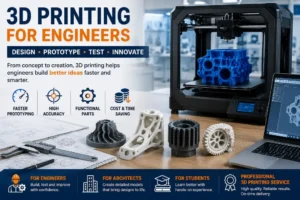
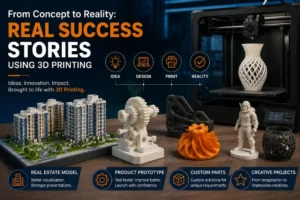
Imagine creating a physical object directly from a digital design with incredible precision and detail. What once seemed like science fiction is now a reality thanks to 3D printing. From prototypes and architectural models to customized products and industrial components, this technology is transforming the way we design and manufacture objects.
But have you ever wondered how a 3D printer actually works? In this guide, we’ll explain the process in simple terms so anyone can understand it.
What Is a 3D Printer?
A 3D printer is a machine that creates three-dimensional objects layer by layer using a digital design file. Unlike traditional manufacturing methods that cut or remove material, a 3D printer builds an object from the ground up.
This process allows designers, engineers, startups, and manufacturers to quickly turn ideas into physical products with speed and accuracy.
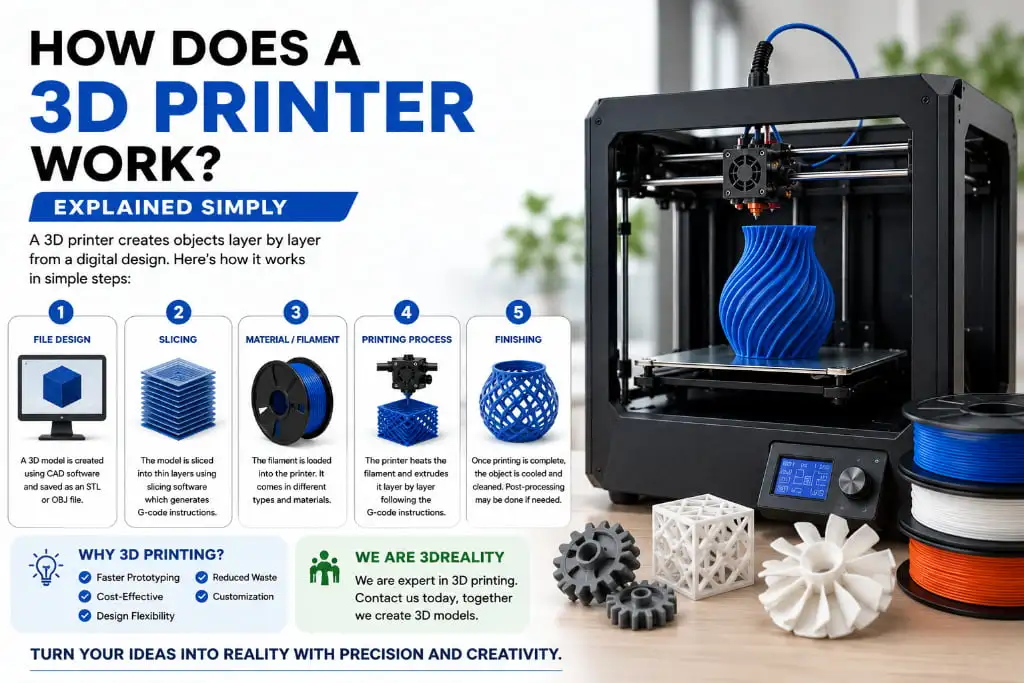
Step 1: Creating the File Design
Every printed object starts with a file design. This is a digital 3D model created using CAD (Computer-Aided Design) software such as Fusion 360, SolidWorks, Blender, or AutoCAD.
The designer creates a virtual version of the object, including its shape, dimensions, and details. Once completed, the model is exported into a format such as STL or OBJ, which can be read by the printer software.
Think of the file design as the blueprint that tells the machine exactly what to create.
Step 2: Slicing the Model
After the design is ready, it is imported into slicing software.
The slicer converts the 3D model into hundreds or even thousands of thin horizontal layers. It also generates instructions that tell the printer:
- Where to move
- How much material to use
- How fast to print
- Which areas need support structures
These instructions are saved as a G-code file, which acts as a guide for the printer throughout the printing process.
Step 3: Loading the Material
Before printing begins, the machine needs raw material.
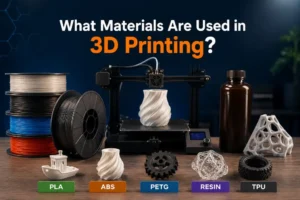
One of the most common materials used is filaments. These are thin strands of plastic wound onto a spool and fed into the printer.
Popular types of filaments include:
- PLA (easy to print and eco-friendly)
- ABS (strong and durable)
- PETG (good balance of strength and flexibility)
- TPU (flexible material)
Different filaments are chosen depending on the project’s requirements and desired properties.
Step 4: The Printing Process
Once everything is prepared, the printer begins creating the object layer by layer.
The filament is heated until it melts and is then pushed through a small nozzle. The nozzle moves according to the instructions in the G-code and deposits material precisely where it is needed.
As one layer is completed, the printer moves slightly upward and starts building the next layer on top. This process continues until the entire object is finished.
The result is a physical model that perfectly matches the original digital design.
Step 5: Cooling and Finishing
After printing is complete, the object is allowed to cool. Depending on the complexity of the model, some post-processing may be required.
This can include:
- Removing support structures
- Sanding rough surfaces
- Painting or coating
- Assembly of multiple parts
These finishing touches improve the appearance and functionality of the final product.
Why Is 3D Printing So Popular?
The growing popularity of this technology comes from its many advantages.
Faster Prototyping
Businesses can test ideas quickly without waiting weeks for traditional manufacturing.
Cost Savings
Creating prototypes becomes more affordable because there is no need for expensive molds or tooling.
Design Flexibility
Complex shapes and custom designs can be produced easily.
Reduced Waste
Material is used only where needed, making the process more efficient.
Customization
Each product can be modified without major production changes.
Where Is This Technology Used?
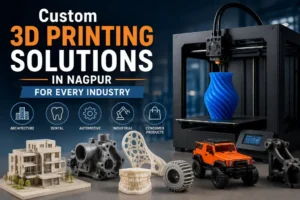
Today, 3D printing is being used across numerous industries, including:
- Product development
- Architecture
- Automotive manufacturing
- Healthcare
- Education
- Engineering
- Aerospace
- Consumer products
From simple prototypes to functional industrial parts, the possibilities continue to expand every year.
Need Professional 3D Printing Support?
Understanding how a printer works is only the beginning. Creating high-quality models requires the right expertise, materials, and equipment.
At 3D Reality, we specialize in creating accurate prototypes, industrial components, architectural models, and custom projects. We are experts in innovative manufacturing solutions and help businesses transform ideas into reality.
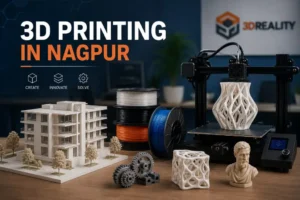
If you are looking for a reliable 3D printing service in Nagpur, our team is ready to assist with everything from file preparation to final production. Together, we can create detailed 3D models that meet your exact requirements.
Contact Us
Whether you’re a startup, designer, engineer, or manufacturer, our experts can help bring your vision to life.
At 3D Reality, we combine technology, creativity, and precision to deliver outstanding results. Contact us today and let’s create something amazing together.