Imagine finding a product that looks almost perfect, but the size is slightly wrong, the design isn’t what you wanted, or it doesn’t match your space. Traditionally, you would have to search for another product or ask a manufacturer to create a custom version, which could take more time and cost more money. Today, 3D printing is changing that process by making product customization faster, more flexible, and accessible to more people.
From personalized home décor and replacement parts to business prototypes and unique gifts, 3D printing allows ideas to move from a digital design to a physical product without requiring traditional manufacturing methods. This is one reason customized products are becoming increasingly interesting for individuals, startups, designers, and businesses.
What Makes 3D Printing Different?
Traditional manufacturing often requires molds, specialized tools, or large production runs. These requirements can make customization difficult, particularly when only a few products are needed. With 3D printing, a product can be created directly from a digital 3D model. If you want to change the size, shape, pattern, or another design element, the digital model can be modified before printing.
This makes the process much more flexible. You don’t necessarily need to manufacture hundreds of identical products to test a new idea. A single customized piece can be produced, reviewed, improved, and printed again.
Create Products Based on Your Exact Requirements
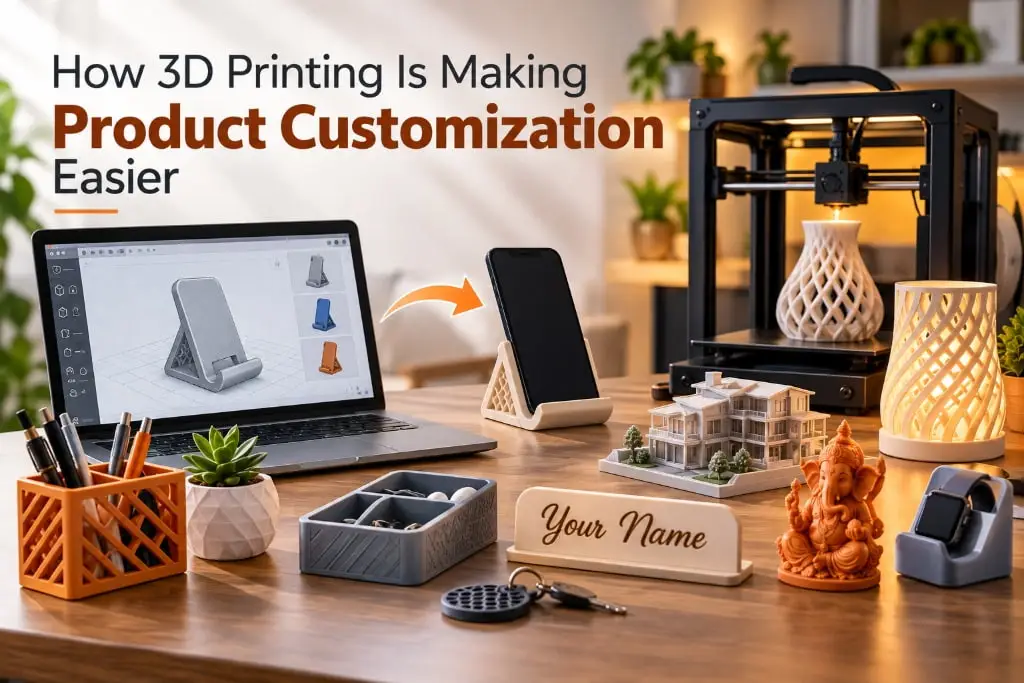
One of the biggest advantages of 3D printing is the ability to design products around specific requirements. For example, imagine you need a phone stand that fits a particular device and has a specific viewing angle. Instead of buying a standard stand, you can create a design based on those measurements.
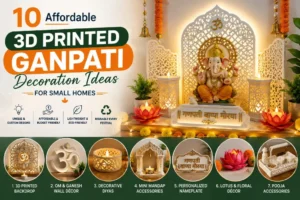
The same approach can be used for organizers, brackets, holders, decorative products, planters, nameplates, storage solutions, and many other everyday objects. This makes a 3D Printed product more than just something manufactured with a different technology—it can be something designed specifically for the person using it.
Personalization Becomes Easier
Customization isn’t always about changing the entire product. Sometimes a small personal detail can make an ordinary item feel special. A name, logo, pattern, message, or unique shape can transform a standard design into a personalized product.
For example, businesses can add their logo to promotional products, homeowners can create personalized décor, and customers can design gifts around a particular person or occasion. With 3D printing, these changes can often be made within the digital model before production.
This makes personalized manufacturing practical even when only a small quantity is required.
3D Printing Makes Prototyping Faster
Product customization is particularly valuable during product development. Before investing in large-scale manufacturing, designers and businesses can create a prototype using 3D printing.
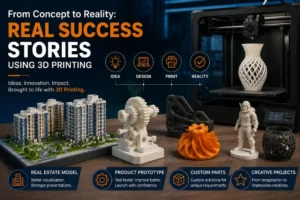
Suppose a startup has designed a new product. Instead of immediately producing a large quantity, the team can print a physical prototype, check its size and appearance, identify design problems, and make improvements. The updated version can then be printed again.
This process helps teams understand how a product looks and feels in the real world rather than relying only on a computer screen. It can also make communication between designers, engineers, clients, and manufacturers easier.
Useful for Different Industries
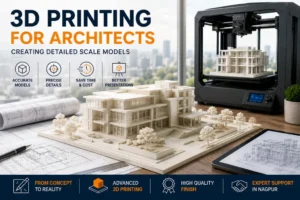
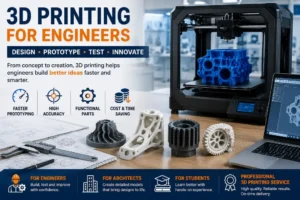
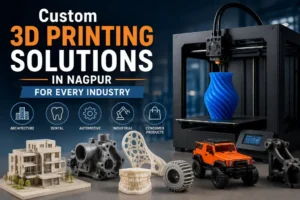
The flexibility of 3D printing makes it useful across many industries. Architects can create customized scale models of buildings, engineers can develop prototypes and functional components, product designers can test new concepts, and businesses can create customized promotional products.
It can also be useful in education, healthcare-related product development, automotive design, manufacturing, interior design, and home décor. The exact applications depend on the material, printer, design, and intended use.
For smaller businesses, this flexibility can be particularly useful because they can experiment with customized products without immediately committing to large production quantities.
From Simple Ideas to Unique Products
One of the most exciting parts of customization is that the starting point doesn’t always have to be a finished product design. You might have a rough sketch, a reference photograph, measurements, or simply an idea of what you want.
A designer can use that information to develop a digital 3D model that can then be reviewed and adjusted before printing. This creates a bridge between imagination and manufacturing.
For example, someone may want a decorative object that fits a specific shelf. Instead of searching for a product with the correct dimensions, they can have a model designed specifically for that shelf. Similarly, a business may want a custom display stand that holds its products in a particular arrangement.
Customization Without Making Products Complicated
Customization doesn’t necessarily mean creating something extremely complicated. Sometimes the most useful customized products are very simple.
A cable holder that fits a particular desk, a wall mount designed for a specific device, a drawer organizer made to match a particular drawer, or a nameplate created in a preferred style can all benefit from customized manufacturing.
The important point is that the product is designed around the user’s requirements instead of forcing the user to adjust to a standard product.
Why Businesses Are Exploring Customized 3D Printing
For businesses, customization can create opportunities to offer products that stand out from mass-produced alternatives. Companies can experiment with different designs, create limited-edition products, produce prototypes, or manufacture small batches based on customer requirements.
It can also help businesses test customer ideas before investing heavily in production. If a particular design receives positive feedback, the business can consider producing it on a larger scale using an appropriate manufacturing process.
Turn Your Product Idea Into Reality with 3DReality
We are 3DReality, and we are experts in 3D printing and custom 3D model development. If you have an idea for a product, you don’t need to have a complete technical design ready. You can share your concept, sketch, reference image, measurements, or existing 3D file with us.
Together, we can develop and create your product according to your requirements and make it more useful, attractive, and personalized. Whether you need a prototype, customized home product, business model, decorative item, or something completely unique, our team can help turn your concept into a physical 3D Printed product.
The Future of Product Customization
As digital design tools and 3D printing technology continue to develop, creating customized products is becoming more accessible. The biggest change is that manufacturing is no longer limited to producing large quantities of the same design.
Instead, products can increasingly be designed around individual needs. A customer can have a different size, a business can create a unique product, and a designer can quickly test several versions of an idea.
That flexibility is what makes 3D printing so useful. It connects creativity with manufacturing and gives people more freedom to create products that fit their requirements.
Conclusion
Product customization is becoming easier because 3D printing makes it possible to modify designs before production and create products in small quantities. From personalized décor and everyday household items to prototypes and business products, the technology can turn specific requirements into physical objects.
Instead of asking, “Which existing product should I buy?”, people can increasingly ask, “What product do I actually need?” With the right design and 3D printing expertise, that idea can become a real product.
Q1. What is Product Customization?
Product customization means modifying a product's design, size, shape, or features according to specific requirements.
Q2. How does 3D printing help with Product Customization?
3D printing allows digital designs to be easily modified before creating the physical product.
Q3. What products can be customized with 3D printing?
Home decor, prototypes, organizers, accessories, replacement parts, models, and many other products can be customized.
Q4. Is customized 3D printing suitable for small quantities?
Yes, 3D printing is useful when you need one or a small number of customized products.
Q5. Can I create a product from my own idea?
Yes, a sketch, reference image, measurements, or concept can be developed into a printable 3D model.