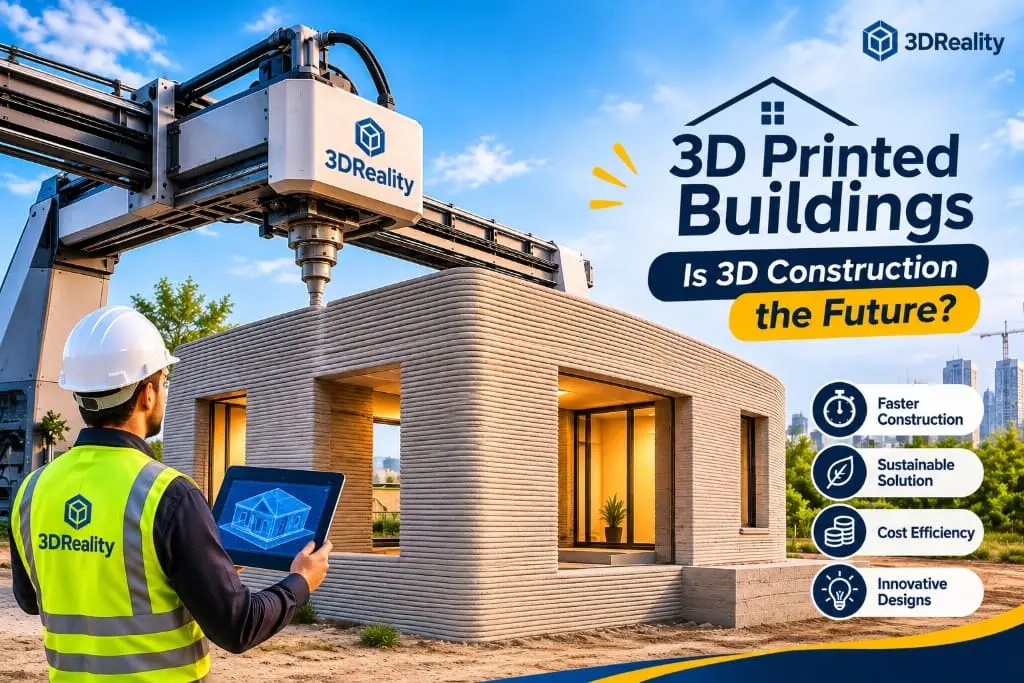
The construction industry is evolving with new technologies, and 3D printing is becoming one of the most exciting innovations in modern construction. From residential houses to commercial buildings, 3D printing technology is changing how structures can be designed and built. It offers new possibilities for faster construction, creative architectural designs, and efficient material usage.
But is 3D construction really the future of the building industry? Let’s explore how this technology works, its benefits, costs, challenges, and potential applications.
What Is 3D Printed Construction?
3D printed construction is an advanced building method that uses large-scale 3D printers to create building components or entire structures layer by layer. Instead of using traditional bricks, blocks, and conventional construction methods, specialized printers use printable concrete or cement-based materials to build walls and other structural elements.
The process starts with a digital 3D building design, which is converted into instructions for a construction printer. The printer then deposits material layer by layer according to the design.
This technology makes it possible to create customized structures, complex shapes, and innovative architectural designs with greater precision.
How Does 3D Printing Build a House?
The process of building a 3D printed house involves several important steps:
- Digital Designing: Architects create a detailed 3D model of the building using specialized design software.
- Model Preparation: The digital design is converted into instructions that the printer can understand.
- Material Preparation: Special concrete or cement-based mixtures are prepared for printing.
- 3D Printing: A large construction printer deposits material layer by layer to create walls and other components.
- Finishing Work: Additional elements such as roofing, doors, windows, electrical systems, plumbing, and interior finishing are installed.
This automated process can reduce manual work and make certain construction activities more efficient.
What Materials Are Used in 3D Printed Buildings?
Material selection plays an important role in construction 3D printing. Unlike ordinary plastic used in small 3D printers, construction printers generally use specially formulated concrete and cement-based mixtures.
Some commonly explored materials include:
- Printable Concrete: Special concrete mixtures designed to flow smoothly through printer nozzles.
- Cement-Based Materials: Used to create strong and stable printed structures.
- Geopolymer Materials: Alternative binders being explored for more sustainable construction.
- Recycled Materials: Certain recycled materials can be incorporated into suitable construction mixtures.
These materials must maintain the right consistency, strength, and bonding properties to support the building structure.
Benefits of 3D Printed Buildings
3D printing offers several potential advantages over conventional construction methods.
- Faster Construction: Automated printing can reduce the time needed to build walls and certain structural components.
- Reduced Material Waste: Precise material placement helps minimize unnecessary material usage.
- Creative Designs: Architects can experiment with complex shapes and customized building designs.
- Reduced Labour Requirements: Automation can reduce the need for certain manual construction activities.
- Cost Efficiency: Depending on the project, material selection, and equipment, 3D printing may help reduce some construction expenses.
How Real Estate 3D Printing Is Transforming the Construction Industry
The growing interest in real estate 3d printing is creating new opportunities for property developers, architects, and construction companies. This technology allows professionals to explore customized building designs, modern housing solutions, and innovative architectural concepts.
For the real estate industry, 3D printing could support affordable housing projects, faster development of certain building components, and more flexible construction designs.
As the technology improves, it may become an important part of future residential and commercial construction projects.
3D Printed Buildings vs Traditional Construction
Both construction methods have their own advantages, but they differ in their processes.
- Construction Speed: 3D printing can automate certain building activities, while traditional construction often involves more manual processes.
- Design Flexibility: 3D printing supports complex shapes, whereas traditional methods may require additional work for customized designs.
- Material Waste: 3D printing can reduce waste through controlled material placement.
- Labour: 3D construction reduces some manual tasks, although skilled workers are still required.
- Investment: 3D construction requires specialized equipment and technical expertise.
The best method depends on the building design, project budget, location, and construction requirements.
Are 3D Printed Houses Strong and Durable?
One common question is whether 3D printed houses are safe enough for everyday living. Their strength depends on several factors, including material quality, structural design, reinforcement, printing accuracy, and construction standards.
Proper engineering, testing, and quality control are essential to ensure that printed buildings meet safety requirements. Like traditional buildings, they must also be designed according to local building regulations and environmental conditions.
Challenges of 3D Printed Construction
Despite its potential, this technology still faces some challenges. High initial equipment costs, limited material availability, reinforcement requirements, regulatory approvals, and the need for skilled professionals can affect large-scale adoption.
Additionally, not every building component can be printed. Roofing, plumbing, electrical systems, and finishing work may still require conventional construction techniques.
Is 3D Construction the Future?
3D construction has the potential to transform the building industry through automation, innovative designs, and more efficient construction processes. With developments in artificial intelligence, robotics, and sustainable materials, this technology could become increasingly useful for residential, commercial, and industrial projects.
Although it may not completely replace traditional construction, 3D printing is likely to become an important part of the future construction industry.
Bring Your Ideas to Life with 3DReality
At 3DReality, we specialize in professional 3D printing solutions, helping students, engineers, architects, businesses, and creators turn their digital ideas into real-world models. From customized designs and engineering prototypes to creative 3D printed products, we focus on delivering quality and precision.
Looking for reliable 3D printing services? Contact 3DReality and let us help you transform your ideas into reality!
FAQ’s
Q1. What is 3D printed construction?
It is a construction method that uses large-scale 3D printers to build structures layer by layer using specialized materials.
Q2. Are 3D printed houses cheaper than traditional houses?
They can reduce certain construction costs, but the overall price depends on materials, equipment, labour, and finishing.
Q3. How long does it take to build a 3D printed house?
Printing the walls may take days, but completing the entire house requires additional construction and finishing work.
Q4. What materials are used in 3D printed buildings?
Special concrete mixtures, cement-based materials, and some alternative printable materials are used.
Q5. Can 3D printed houses be built in India?
Yes. India has already seen 3D printed construction projects, including residential building demonstrations.