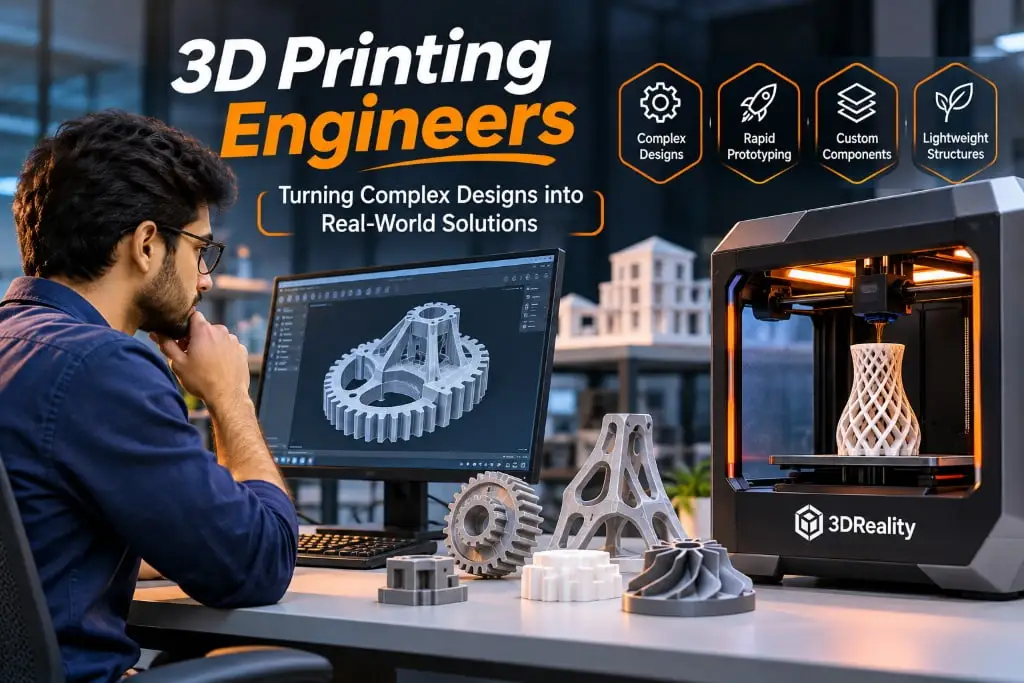
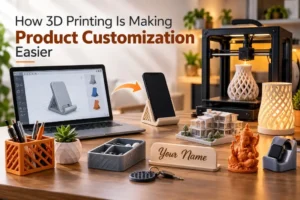
The engineering industry is continuously evolving with new technologies, and 3D printing is becoming an important part of modern product development. From mechanical components to customized prototypes, engineers are using 3D printing to transform digital designs into real-world objects. This technology makes it possible to create complex shapes, lightweight structures, and customized components that can be difficult to manufacture using traditional methods.
But how exactly does 3D printing help engineers create complex designs? Let’s explore its benefits, applications, materials, and role in the future of engineering.
What Is 3D Printing in Engineering?
3D printing in engineering is a manufacturing process that creates physical objects from digital 3D models by adding material layer by layer. It is also known as additive manufacturing.
Engineers use specialized software to design components and convert them into printable files. A 3D printer then follows these digital instructions to produce the required object.
Unlike traditional manufacturing, which often involves cutting or removing material, 3D printing builds objects by adding material only where it is needed. This provides greater flexibility when creating customized and complicated designs.
How Does 3D Printing Help Engineers Create Complex Designs?
One of the biggest advantages of 3D printing is its ability to produce intricate geometries and customized structures.
- Creating Complex Shapes: Engineers can design detailed components with curves, internal channels, cavities, and unique geometries that may be difficult to manufacture using conventional techniques.
- Lightweight Components: 3D printing allows engineers to create hollow structures and lattice designs that reduce weight while maintaining the required performance when properly engineered.
- Customization: Engineers can modify digital designs according to specific project requirements without needing expensive moulds or specialized tooling for every variation.
- Better Design Flexibility: Design changes can be made directly in CAD software, making it easier to test different versions of a component.
- Detailed Prototypes: Modern 3D printers can produce intricate models that help engineers evaluate shapes, dimensions, and functionality before final production.
Role of 3D Printing in Rapid Prototyping
Rapid prototyping is one of the most useful applications of 3D printing in engineering. Before manufacturing a final product, engineers need to test whether their designs work correctly.
With 3D printing, they can quickly convert digital models into physical prototypes, identify design problems, and make improvements.
For example, mechanical engineers can print gears, machine components, brackets, and product enclosures to check their dimensions and fit. This can reduce development time and help avoid expensive design mistakes during production.
Applications of 3D Printing in Different Engineering Industries
3D printing is being used across several industries to create innovative and customized components.
- Mechanical Engineering: Creating gears, machine parts, functional prototypes, and customized components.
- Automotive Engineering: Developing lightweight parts, vehicle prototypes, and specialized accessories.
- Aerospace Engineering: Producing complex components and optimized lightweight structures.
- Robotics: Manufacturing robotic grippers, customized frames, and mechanical parts.
- Civil Engineering: Creating architectural models, construction prototypes, and 3D Printed Buildings.
- Biomedical Engineering: Developing anatomical models and customized medical components.
These applications demonstrate how additive manufacturing is expanding design possibilities across engineering fields.
How Affordable 3D Design Supports Engineering Projects
The combination of digital modelling and 3D printing makes product development more flexible. Affordable 3D Design helps students, startups, engineers, and businesses explore creative ideas without always requiring expensive manufacturing processes.
For example, engineering students can develop customized college project models, while businesses can test product prototypes before investing in large-scale manufacturing.
Similarly, 3D printing makes it easier to produce customized components in smaller quantities, depending on the material, design complexity, and production requirements.
Which Materials Are Used for Engineering 3D Printing?
Choosing the right material is important for achieving the required strength, flexibility, and durability.
Some commonly used materials include:
- PLA: Suitable for concept models and basic prototypes.
- ABS: Useful for certain functional prototypes requiring better heat resistance.
- PETG: Offers a balance of strength and flexibility.
- Nylon: Suitable for durable engineering components.
- Resin: Ideal for highly detailed models.
- Metal: Used for specialized industrial components and advanced engineering applications.
Material selection depends on the intended application, operating conditions, and printer technology.
Challenges of 3D Printing in Engineering
Although 3D printing offers many advantages, engineers must also consider certain limitations. These include material restrictions, printing time, dimensional accuracy, surface finishing, and the need for support structures.
Some complex components may also require additional post-processing. Therefore, engineers must carefully optimize their digital designs according to the capabilities of the selected 3D printing technology.
What Is the Future of 3D Printing in Engineering?
The future of engineering 3D printing looks promising with developments in artificial intelligence, generative design, automation, and advanced materials.
These technologies can help engineers explore innovative product designs, optimize component structures, and develop customized solutions. As 3D printing becomes more accessible, it is expected to play an increasingly important role in product development, prototyping, and modern manufacturing.
Turn Your Ideas into Reality with 3DReality!
At 3DReality, we specialize in professional 3D printing solutions that help students, engineers, designers, and businesses transform their creative ideas into real-world products. Whether you need customized models, engineering prototypes, mechanical components, or innovative 3D printed designs, we focus on delivering quality, precision, and reliable solutions.
Have an idea or a design ready? Let 3DReality bring it to life with professional 3D printing services. Contact us today and turn your imagination into reality!
FAQ’s
Q1. How does 3D printing help engineers create complex designs?
It allows engineers to manufacture intricate shapes, customized components, and lightweight structures directly from digital models.
Q2. What are the applications of 3D printing in engineering?
It is used in mechanical, automotive, aerospace, robotics, civil, and biomedical engineering.
Q3. Which 3D printing material is best for engineering projects?
PLA, ABS, PETG, Nylon, Resin, and Metal are used depending on the project's requirements.
Q4. How does 3D printing help in rapid prototyping?
It allows engineers to quickly produce physical prototypes, test designs, and make improvements.
Q5. Can 3D printing create complex mechanical components?
Yes, it can produce intricate mechanical parts with customized geometries, internal channels, and lightweight structures.