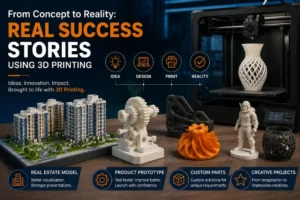
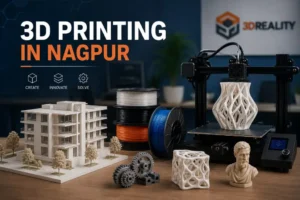
Imagine having an idea for a product and being able to turn it into a physical object without investing in expensive molds, large production lines, or thousands of units. This is one of the biggest opportunities created by 3D printing. What was once mainly associated with engineering laboratories and industrial manufacturing is now becoming useful for businesses, students, designers, architects, startups, and everyday consumers across India.
India has a growing need for faster product development, affordable manufacturing, customization, and locally produced solutions. 3D printing fits naturally into these requirements because it allows products to be created directly from digital designs. As the technology becomes more accessible, its role is expected to expand across industries and everyday applications.
Why 3D Printing Has So Much Potential in India
One of the biggest strengths of 3D printing is flexibility. Traditional manufacturing is often most efficient when producing large quantities of the same product. However, many modern businesses don’t always need thousands of identical products. Startups may need a few prototypes, architects may need detailed models, and customers may want products designed specifically for their requirements.
With 3D printing, a digital design can be modified and printed without creating an entirely new manufacturing setup. This makes experimentation much easier. A designer can create one version, test it, make changes, and produce another version. For businesses trying to develop new products, this can make the development process more flexible.
Product Customization Will Become More Important
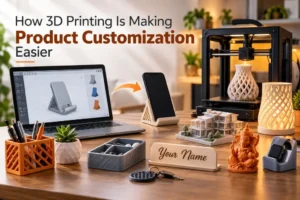
One of the most exciting areas for the future is Product Customization. Customers increasingly want products that feel personal rather than completely mass-produced. 3D printing can support this demand by allowing changes to size, shape, patterns, text, structure, and other design elements.
For example, a customer could request a customized home organizer that fits a particular drawer. A business could create a branded display stand for its products. An architect could develop a detailed scale model for a project. Even decorative products can be created around a particular theme, occasion, or personal preference.
Instead of asking, “Which product available in the market fits my needs?”, people can increasingly ask, “Can I create a product specifically for my needs?”
From Prototypes to Real Products
Prototyping is another area where 3D printing can make a major difference. Before manufacturing a product at scale, businesses need to understand whether the design works properly. A physical prototype provides an opportunity to check dimensions, appearance, assembly, usability, and other practical details.
For Indian startups and small businesses, this can be particularly useful during the early stages of product development. Instead of immediately committing to large production quantities, they can explore ideas through smaller-scale manufacturing and improve the design based on testing and feedback.
This approach can also benefit students and innovators who want to turn concepts into physical models for academic projects, competitions, demonstrations, or experiments.
More Industries Are Exploring 3D Printing
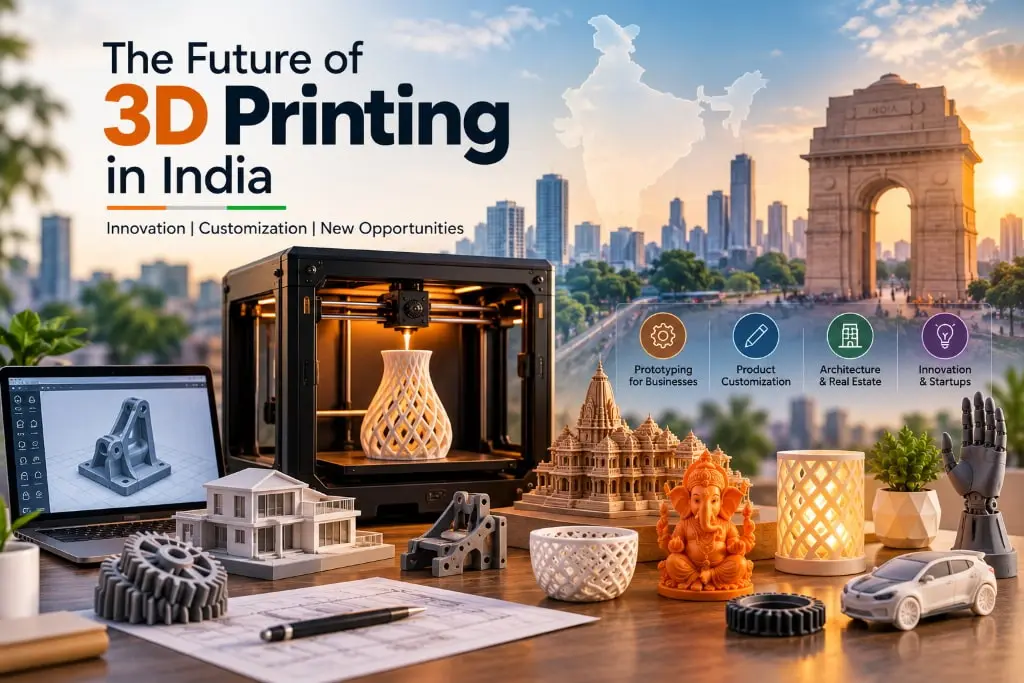
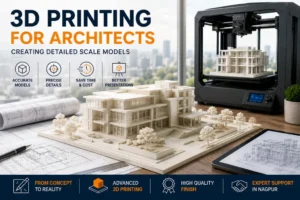
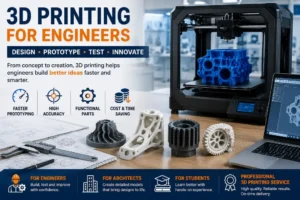
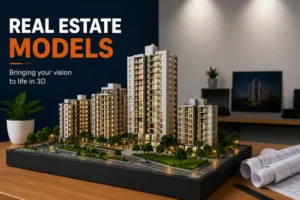
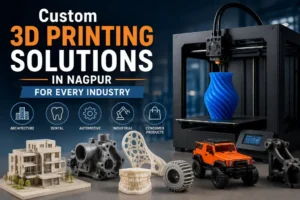
The future of 3D printing in India is not limited to one particular industry. Architecture and real estate can use printed scale models to present buildings and developments more clearly. Engineering teams can use it for prototypes and customized components. Product designers can test new concepts, while educational institutions can use printed models to make complex ideas easier to understand.
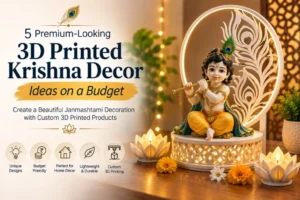
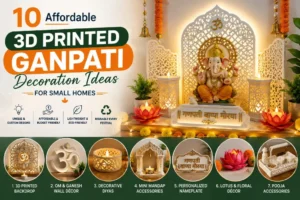
Home décor is another interesting application. Customized lamps, planters, organizers, nameplates, decorative models, and other products can be designed according to individual preferences. Festival and event décor can also benefit from customized designs that are difficult to find as ready-made products.
As more people understand what the technology can actually do, the range of applications can continue to grow.
The Rise of Local 3D Printing Services
Another important development is the increasing importance of professional 3D printing services. Not everyone who wants a customized product needs to purchase and maintain a 3D printer. A professional service can handle the printing process while the customer focuses on the idea and final requirements.
This is particularly useful when someone needs only a few products or wants a complex design without investing in equipment. Customers can provide a 3D file, reference image, measurements, or even a basic concept and work with a service provider to develop the final product.
For businesses, this can make customized manufacturing more accessible without requiring a large initial investment in machinery.
3D Printing and Sustainable Manufacturing
Sustainability is also likely to remain an important part of the conversation around future manufacturing. 3D printing can produce objects layer by layer, which can provide more control over how material is used compared with some traditional manufacturing processes. However, the environmental impact depends heavily on the material, printer, energy source, product design, and how the finished product is used or disposed of.
The ability to produce items when they are needed can also be useful for certain applications. For example, instead of maintaining large inventories of specialized products, businesses may be able to produce some components closer to the time they are required.
What Could the Future Look Like?
The future of 3D printing in India could move beyond simply printing prototypes. As digital design tools, materials, printers, and professional services continue to develop, customized production could become increasingly practical for businesses and consumers.
Imagine ordering a product online and choosing its dimensions, appearance, or personalization before it is produced. Imagine a small business testing a new product with a limited batch before investing in mass manufacturing. Imagine an architect showing a client a physical model created directly from a digital design. These are examples of how digital design and physical manufacturing can become more closely connected.
The technology will not replace every traditional manufacturing method. Large-scale production will continue to have important advantages for many products. Instead, 3D printing is likely to become another valuable manufacturing option, particularly where customization, rapid development, complex designs, or smaller production quantities are important.
Turn Your Ideas Into Reality with 3DReality
We are 3DReality, and we are experts in 3D printing and custom 3D model development. If you have a product idea, prototype requirement, decorative concept, architectural model, or customized object in mind, you can share your reference image, sketch, measurements, or existing 3D file with us.
Together, we can create your product and make it more beautiful, practical, and personalized. Whether you need a single customized model or multiple printed products, our team can help turn your digital idea into a physical creation through 3D printing.
Conclusion
The future of 3D printing in India is about more than advanced machines. It is about making manufacturing more flexible and giving people greater freedom to create what they actually need. From Product Customization and prototyping to architecture, education, business, home décor, and personalized products, the possibilities are expanding.
As the technology becomes easier to access, 3D printing can become an important bridge between an idea and a finished product. For innovators, businesses, designers, and everyday creators, that means the future of making things could become much more personal, creative, and accessible.