Every great product begins with an idea. But turning that idea into something you can see, touch, test, and present can be challenging. Traditional manufacturing methods often require expensive tooling, long production times, and large minimum quantities. 3D printing has changed this process by making it easier to transform digital concepts into physical objects quickly and efficiently.
Today, businesses, architects, engineers, startups, students, and creators use 3D printing for everything from early prototypes to detailed architectural models. Here are some practical success-story scenarios that show how this technology can take an idea from concept to reality.
1. Turning a Product Idea into a Working Prototype
Imagine a startup developing a new electronic accessory. The team has a digital design but needs a physical version before investing in mass production.
Instead of creating expensive moulds, they can use 3D printing to produce an initial prototype. Once printed, the team can check its dimensions, appearance, fit, and functionality.
Suppose they discover that a button is difficult to reach or the product is slightly too large. The digital design can be updated, and another version can be printed quickly.
This repeated process helps businesses identify problems early, improve their products, and move toward final production with greater confidence.
2. Helping Real Estate Projects Come to Life
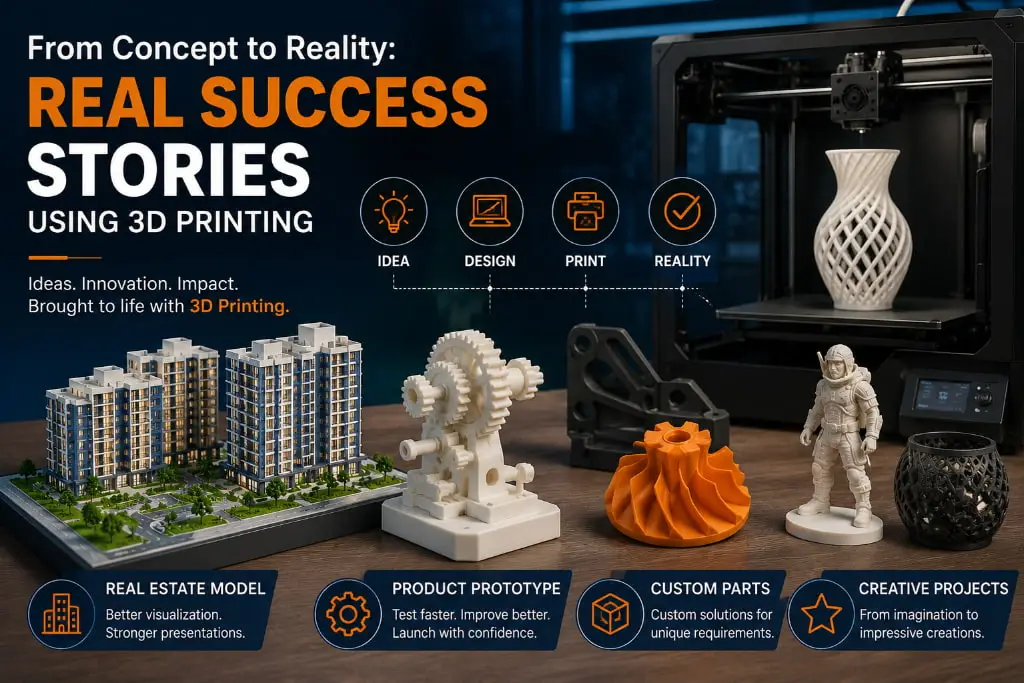
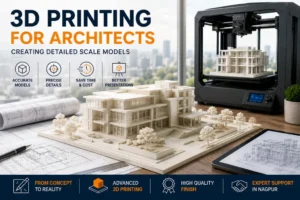
Architectural drawings and digital renders contain important information, but not every client can easily understand them. A physical real estate model can make a proposed development much easier to visualise.
For example, a developer planning a residential project can create a detailed 3D model showing apartment buildings, roads, parking spaces, gardens, entrances, and other important elements.
The model can then be used during client meetings, exhibitions, sales presentations, and discussions with project stakeholders. Instead of imagining how the completed development might look, people can examine a physical representation from different angles.
For architects and developers, this can improve communication and make project presentations more engaging.
3. Creating Custom Parts for Unique Requirements
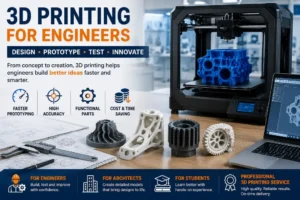
Sometimes businesses need a component that isn’t easily available in the market. It could be a custom enclosure, mounting bracket, machine component, display part, or replacement piece.
With 3D printing, a component can be designed according to specific dimensions and produced without setting up a traditional manufacturing line.
Engineers can also test the printed part and make adjustments to the digital file before producing the next version. This flexibility is especially useful for custom applications and low-volume requirements.
4. Helping Students Transform Ideas into Projects
3D printing isn’t limited to commercial applications. Students and researchers can use the technology to create physical models for academic projects, engineering concepts, exhibitions, and experiments.
Consider an engineering student who has designed a mechanical system on a computer. A 3D printed version allows them to physically examine the design and demonstrate how different parts work together.
This makes learning more practical and gives students an opportunity to turn theoretical concepts into real objects.
5. Creating Personalised Products and Gifts
Another exciting application is custom product creation. People can transform creative ideas into personalised gifts, decorative objects, nameplates, miniatures, models, and unique accessories.
Unlike mass-produced items, 3D printing provides greater freedom to customise shapes, dimensions, text, and design details.
For small businesses and creators, this also opens opportunities to develop unique products without maintaining large inventories.
Why 3D Printing Makes Innovation Easier
One of the biggest advantages of 3D printing is its ability to shorten the journey between an idea and a physical product.
Designs can be created digitally, printed, tested, modified, and printed again. This makes experimentation more accessible and helps reduce the risk of committing to a final design too early.
Working with an affordable printing service can also eliminate the need to purchase and maintain professional equipment. Customers can focus on their ideas while experienced professionals handle file preparation, material selection, printing, and finishing.
From Your Idea to a Physical 3D Model
You don’t always need a finished 3D file to get started. A sketch, reference, concept, or clear requirement can often become the foundation for a custom digital model.
We are 3DReality, and we are experts in 3D printing and custom 3D model development. Whether you need a prototype, real estate model, engineering component, academic project, personalised product, or something completely unique, contact us with your idea. Together, we can create 3D models and turn what you imagine into a physical reality.
Our goal is to make the journey from concept to finished model simple and practical for individuals, professionals, startups, and businesses.
Conclusion
From prototypes that help improve new products to detailed architectural models that bring future developments to life, 3D printing is changing how ideas are developed and presented.
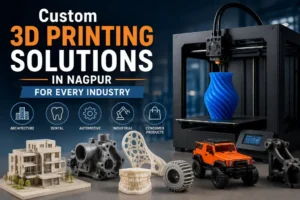
Its flexibility makes it useful across industries while giving businesses and individuals the ability to create customised physical objects without relying entirely on traditional manufacturing.
With the right design, material, technology, and affordable printing service, an idea that exists only in your imagination today could become something you can hold tomorrow.
FAQ’s
Q1. How is 3D printing helping businesses succeed?
3D printing helps businesses create, test, and improve prototypes faster while reducing development time and costs.
Q2. Can 3D printing turn an idea into a real product?
Yes, digital designs and concepts can be transformed into physical prototypes, models, and custom products.
Q3. How is 3D printing used in real estate?
It helps create detailed real estate models for presentations, planning, and better project visualisation.
Q4. Is 3D printing suitable for custom products?
Yes, it is ideal for personalised products, unique components, prototypes, and low-volume production.
Q5. Who can benefit from 3D printing services?
Startups, engineers, architects, students, businesses, designers, and individuals can all benefit from 3D printing.