The world of dentistry is undergoing a revolution — and the driving force behind it is 3D printing. From customized crowns to full jaw restorations, dental professionals are embracing on demand printing technology to enhance precision, reduce costs, and deliver faster, more personalized care to patients.
In recent years, dental 3D printing has moved from being a futuristic concept to an everyday tool in dental clinics and laboratories. This technology is not only transforming how dentists operate but is also improving the overall patient experience. Let’s explore how 3D printing in dentistry is changing the medical landscape — and why it’s considered one of the fastest-growing trends in medical technology.
What Is Dental 3D Printing?
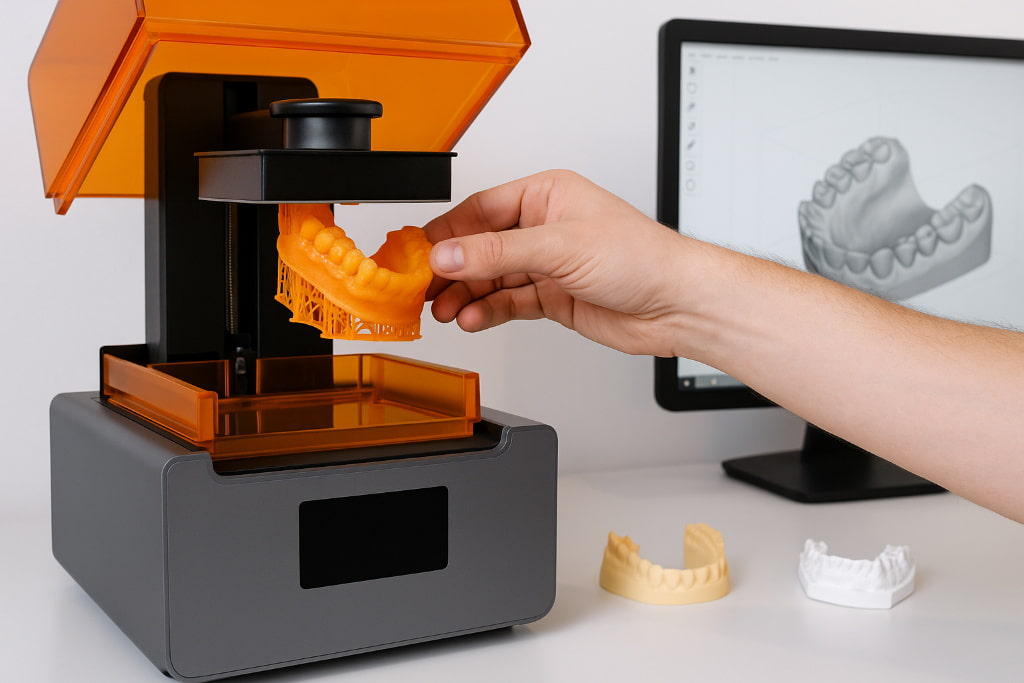
Dental 3D printing uses advanced digital models to create accurate dental devices and prosthetics layer by layer from specialized materials like resins and polymers. With the help of CAD/CAM (Computer-Aided Design and Manufacturing), dentists can design everything from crowns, bridges, and aligners to surgical guides — all with unmatched accuracy.
Unlike traditional methods, on demand printing allows dental professionals to produce parts quickly without relying on external suppliers or long manufacturing times. This not only speeds up treatment but also ensures each product is tailored to the patient’s unique anatomy.
Why 3D Printing Is the Future of Dentistry
1. Unmatched Precision and Customization
3D printing brings incredible precision to dental treatments. Every patient’s oral structure is different, and 3D scanning combined with printing ensures the perfect fit for every crown, aligner, or denture. Traditional methods often require multiple fittings, but 3D printed models minimize that hassle.
2. Faster Turnaround Time with On Demand Printing
The concept of on demand printing has completely changed how dental labs operate. Dentists can now print crowns or bridges within hours instead of weeks. This means patients get same-day restorations — saving both time and money.
3. Cost-Effective and Sustainable
Traditional dental prosthetics can be expensive due to labor, materials, and outsourcing costs. With 3D printing, dentists produce items in-house, significantly lowering production costs. Plus, since only the required material is used during printing, waste is minimized, making it an environmentally friendly option.
4. Improved Patient Experience
No one likes sitting through long dental procedures. With 3D printing in dentistry, treatments are faster, more comfortable, and more precise. The accuracy of printed models ensures better fitting, fewer adjustments, and longer-lasting results.
5. Innovation in Surgical Planning
Beyond prosthetics, 3D printed surgical guides and implants are helping surgeons plan and execute complex dental surgeries with precision. These guides replicate the patient’s bone structure, making the procedure safer and more predictable.
Popular 3D Printing Applications in Dentistry
- Crowns and Bridges – Printed in a few hours with perfect accuracy.
- Clear Aligners and Retainers – Custom-fit aligners are created using 3D models for orthodontic treatments.
- Surgical Guides – Help surgeons perform precise implant placements.
- Dental Models – Used for diagnostics and treatment planning.
- Partial Dentures and Full Prosthetics – Manufactured with extreme precision and comfort.
Each of these applications showcases how 3D printing has made dental solutions faster, better, and more affordable.
How 3D Printing Is Revolutionizing Dental Laboratories
Dental labs traditionally relied on manual techniques — molding, casting, and hand-finishing. But 3D printing in dental labs has automated much of the process, allowing labs to scale production while maintaining accuracy.
On demand printing services have also empowered small dental practices to compete with larger ones, offering high-quality products without heavy investments in equipment or large inventories.
The Growth of 3D Printing in Medical Technology
According to market studies, the global dental 3D printing market is expected to grow exponentially in the next five years. Factors such as the rise of cosmetic dentistry, demand for faster treatments, and technological advancements in resin-based materials are fueling this growth.
This rise aligns with a broader medical trend — where on demand printing is being adopted for everything from orthopedic implants to prosthetic limbs. It’s safe to say that 3D printing is no longer the future — it’s the present of medical innovation.
Why Choose 3D Reality for Dental 3D Printing
When it comes to professional and precise 3D printing services, 3DReality stands at the forefront.
3DReality welcomes you.
We are experts in the 3D printing industry, specializing in high-quality and fast on demand printing solutions for dental, industrial, and creative projects. Our team ensures professional-grade prints that meet your exact requirements with precision and reliability.
Whether you’re a dentist looking to streamline your workflow or a lab wanting to enhance efficiency — contact 3DReality today and experience the future of 3D printing at its best!
Conclusion
Dental 3D printing isn’t just a trend — it’s a transformation that’s redefining the way dental care is delivered. With its ability to produce customized, affordable, and accurate dental solutions through on demand printing, it’s no wonder this technology is growing so rapidly in the medical field.
From improving patient outcomes to enabling faster and more sustainable production, 3D printing in dentistry is shaping a smarter and more efficient future.
So if you’re ready to step into the next generation of dental innovation — remember, 3DReality is here to bring your ideas to life, one perfect print at a time.
FAQ’s
1. What is Dental 3D Printing?
Dental 3D printing is a technology that creates customized dental parts like crowns, aligners, and dentures using digital 3D models for precise and fast results.
2. How does 3D printing benefit dentists and patients?
It reduces treatment time, improves accuracy, and lowers costs by enabling on demand printing of dental restorations directly in the clinic or lab.
3. What materials are used in Dental 3D Printing?
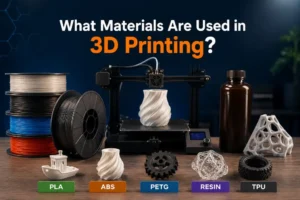
Resins, polymers, and biocompatible materials are commonly used to ensure safety, strength, and durability for dental applications.
4. Can 3D printing be used for dental implants and aligners?
Yes, 3D printing is widely used to create custom-fit aligners, surgical guides, and implant models for more accurate and comfortable treatments.
5. Where can I get professional Dental 3D Printing services?
You can contact 3DReality — experts in the 3D printing industry, offering high-quality, fast, and professional on demand printing for dental and medical needs.