In today’s fast-moving world of architecture and design, visualization is everything. Clients no longer want to imagine how a building will look—they want to see it, feel it, and understand it. This is where 3D printing has become a game-changer for architects. By transforming digital designs into physical models, architects can present ideas more clearly, accurately, and impressively than ever before.
Let’s explore how architects use 3D printing for realistic models, why it’s becoming essential in modern architecture, and how it’s reshaping the design process.
Why Realistic Architectural Models Matter
Architectural drawings and 3D renders are powerful, but they still have limitations. Many clients struggle to understand scale, depth, and spatial relationships from flat screens. Physical models solve this problem instantly.
With 3D printing, architects can create:
- Accurate scale models
- Detailed structural elements
- Clear layouts of interiors and exteriors
- Tangible designs clients can touch and explore
These realistic models improve communication, reduce misunderstandings, and speed up approvals.
How 3D Printing Works in Architecture
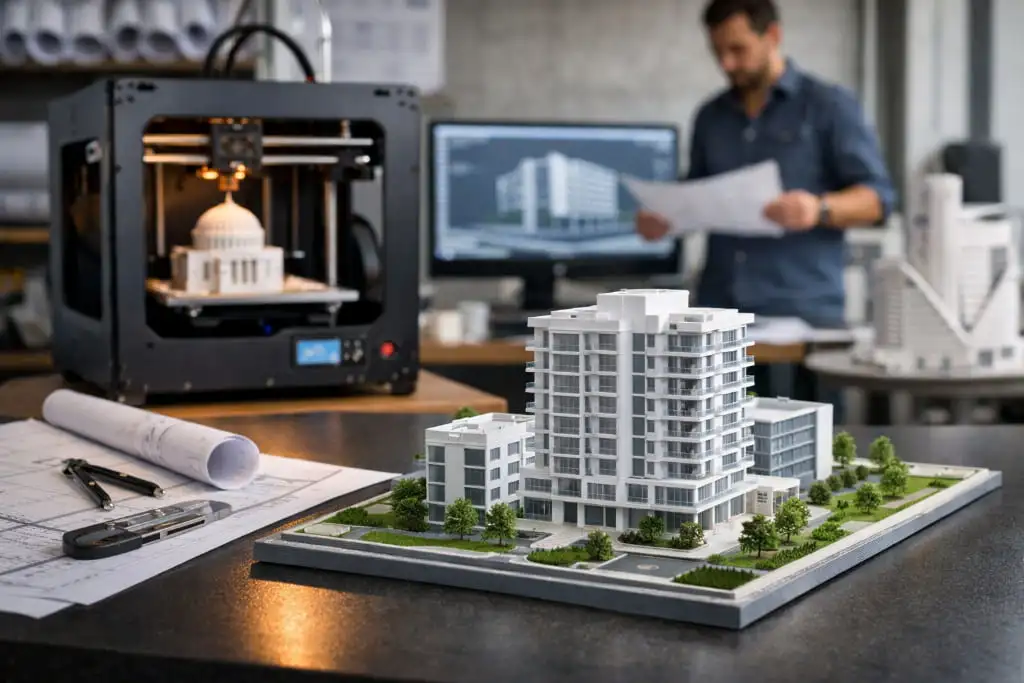
Architects begin by designing a building using CAD or BIM software like AutoCAD, Revit, or SketchUp. These digital files are then converted into formats suitable for 3D printing.
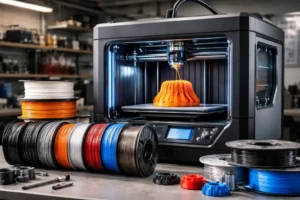
Using advanced 3D printers, the model is printed layer by layer using materials such as PLA, resin, or ABS. The result is a high-precision architectural model that accurately reflects the original design.
This process is faster, more cost-effective, and far more flexible than traditional handcrafted models.
Key Benefits of 3D Printing for Architects
1. Unmatched Accuracy and Detail
One of the biggest advantages of 3D printing in architecture is precision. Even the smallest design details—windows, balconies, textures, and complex geometries—can be printed accurately. This level of detail is nearly impossible to achieve manually.
2. Faster Turnaround Time
Traditional model making can take weeks. With 3D printing, architects can create models in just a few days—or even hours. This speed allows for rapid iterations and quick design changes.
3. Cost-Effective Model Production
While traditional model making requires skilled labor and expensive materials, 3D printing reduces long-term costs. Once the printer setup is ready, multiple models can be produced efficiently with minimal waste.
4. Easy Design Modifications
Need to change a floor plan or façade? Simply update the digital file and reprint. This flexibility helps architects experiment freely without worrying about starting from scratch.
Types of Architectural Models Created Using 3D Printing
Architects use 3D printing to produce various types of models, including:
- Concept models for early design discussions
- Presentation models for clients and investors
- Urban planning models showing surroundings and infrastructure
- Interior layout models for space planning
- Construction models for technical clarity
These models improve understanding at every stage of the architectural workflow.
How 3D Printed Models Improve Client Communication
Clients may not understand architectural terms, but they instantly understand a physical model. 3D printed architectural models help clients visualize:
- Building height and scale
- Room placement and flow
- Exterior aesthetics
- Context within surrounding areas
This clarity builds trust, confidence, and faster decision-making.
Sustainability and 3D Printing
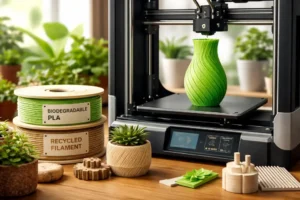
Another major advantage is sustainability. 3D printing produces minimal waste compared to traditional methods. Architects can also use eco-friendly materials and reuse failed prints, making it a greener solution for model making.
The Future of Architecture with 3D Printing
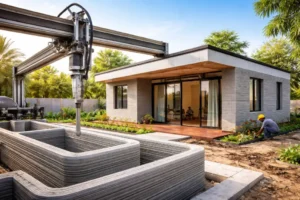
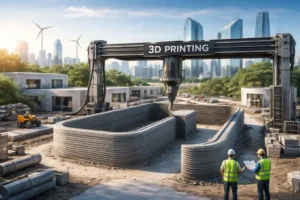
As technology advances, 3D printing will become even more integrated into architecture. From smart city planning to large-scale construction printing, the future is moving toward faster, smarter, and more sustainable design solutions.
Architects who adopt this technology early gain a strong competitive edge in creativity, efficiency, and client satisfaction.
Final Thoughts
3D printing has revolutionized architectural model making, allowing architects to turn ideas into realistic, high-quality physical models with speed and precision. It improves visualization, enhances communication, reduces costs, and supports sustainable practices.
3dreality welcomes you—we are expert in the 3D printing industry. Contact us for professional, accurate, and high-quality 3D printing solutions tailored for architects and designers.