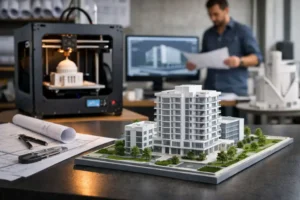
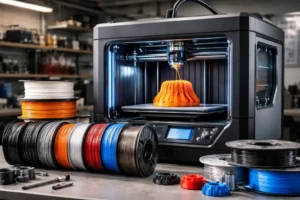
The construction industry is going through one of the biggest transformations in its history, and 3D printing technology is at the center of this change. What once sounded like a futuristic idea—printing buildings layer by layer—is now becoming a practical reality across the world. From affordable housing to smart cities, 3D printing is redefining how we design, build, and live in urban spaces.
In this article, we’ll explore how 3D printing technology is reshaping construction and playing a key role in the development of smart cities, while also explaining why this innovation matters for the future.
What Is 3D Printing in Construction?
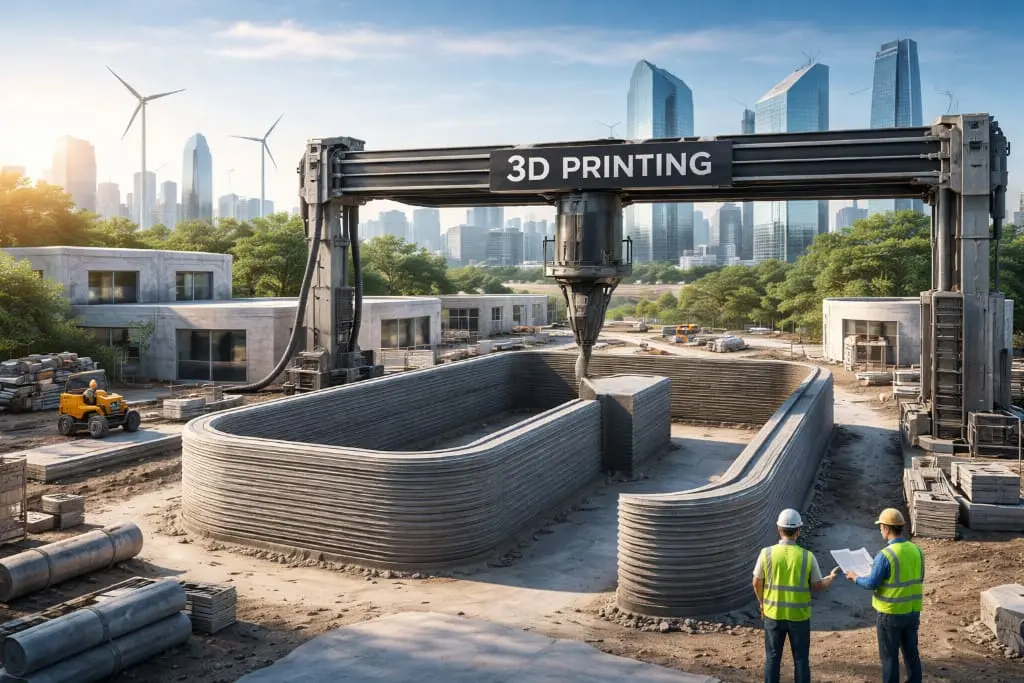
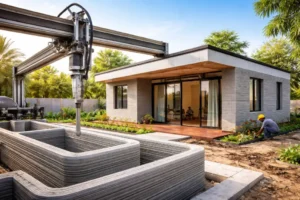
In construction, 3D printing refers to the process of using large-scale printers to create buildings or structural components by depositing material layer by layer. These materials can include concrete, cement-based mixtures, polymers, and even eco-friendly composites.
Unlike traditional construction methods, which rely heavily on manual labor and multiple resources, 3D printing technology automates much of the building process. The result is faster construction, reduced costs, and improved design flexibility.
Faster and More Cost-Effective Construction
One of the biggest advantages of 3D printing in construction is speed. Traditional buildings can take months or even years to complete. With 3D printing technology, entire structures can be printed in days or weeks.
This speed directly impacts cost. Faster timelines mean:
- Lower labor expenses
- Reduced material waste
- Fewer delays due to weather or logistics
For developing regions and rapidly growing cities, 3D printing offers an efficient way to address housing shortages and infrastructure demands.
Sustainable Building for Smart Cities
Smart cities focus on sustainability, efficiency, and intelligent use of resources—and 3D printing technology fits perfectly into this vision.
Here’s how 3D printing supports eco-friendly construction:
- Minimal waste: Materials are used only where needed
- Energy efficiency: Optimized designs improve insulation and airflow
- Eco-friendly materials: Recycled and low-carbon materials can be used
By reducing environmental impact, 3D printing in construction helps cities grow responsibly while meeting climate goals.
Design Freedom and Innovation
Traditional construction often limits architects due to high costs and structural constraints. 3D printing technology removes many of these barriers.
With 3D printing, architects and engineers can:
- Create complex geometric designs
- Customize structures without extra cost
- Design buildings optimized for strength and efficiency
This design freedom is especially valuable for smart cities, where buildings must integrate technology, sustainability, and modern aesthetics.
Affordable Housing and Urban Development
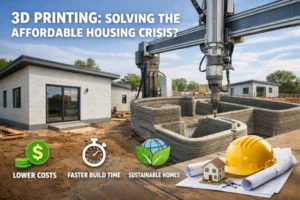
Housing affordability is a major challenge worldwide. 3D printing technology is proving to be a game-changer in this area.
By lowering construction costs and speeding up production, 3D printing makes it possible to build:
- Affordable homes
- Emergency shelters
- Modular housing units
Governments and private developers are increasingly exploring 3D printing in construction to provide quality housing at scale—especially in urban and semi-urban areas.
Smart Infrastructure Integration
Smart cities rely on interconnected systems such as sensors, IoT devices, and energy-efficient networks. 3D printing technology allows these systems to be integrated directly into building designs.
For example:
- Built-in channels for wiring and sensors
- Smart water and energy management systems
- Structures designed for future upgrades
This seamless integration makes buildings smarter from the ground up, reducing retrofitting costs later.
Challenges and Future Potential
While 3D printing in construction offers enormous potential, it still faces challenges such as:
- Regulatory approvals and building codes
- High initial investment in equipment
- Limited awareness and skilled professionals
However, as technology evolves and adoption increases, these challenges are rapidly being addressed. The future of 3D printing technology in smart cities looks promising, with continuous innovation and global investment driving growth.
The Future of Construction Is Being Printed
There’s no doubt that 3D printing technology is reshaping the construction industry and accelerating the development of smart cities. From sustainable housing to intelligent infrastructure, 3D printing is transforming ideas into reality faster than ever before.
As cities continue to expand, the demand for smarter, greener, and more efficient construction will only grow—and 3D printing will play a vital role in meeting that demand.
3dreality welcomes you. We are experts in the 3D printing industry—contact us to turn your construction and smart city ideas into reality.
If you’re looking to stay ahead in the future of construction, now is the time to explore the power of 3D printing technology.
What is 3D printing in construction?
3D printing in construction uses automated printers to build structures layer by layer using concrete or other advanced materials.
2. How does 3D printing help smart cities?
3D printing technology enables faster, sustainable, and cost-effective construction, supporting smart infrastructure development.
3. Is 3D printing construction eco-friendly?
Yes, 3D printing reduces material waste and supports the use of sustainable and recycled building materials.
Can 3D printing reduce construction costs?
3D printing lowers labour, material waste, and project timelines, making construction more affordable.
5. Is 3D printing the future of construction?
Yes, 3D printing technology is rapidly becoming a key solution for modern construction and smart city development.