In the last few years, the healthcare industry has seen a major shift—thanks to 3D printing. What started as a technology used for creating prototypes is now playing a powerful role in producing low-cost medical devices that can save lives, reduce manufacturing time, and improve patient care. Hospitals, clinics, and research centers worldwide are now turning to 3D printed medical tools because they’re affordable, customizable, and extremely efficient.
But what makes 3D printing in healthcare so revolutionary? Let’s dive deep into how this technology is transforming the medical world—especially in developing countries where cost-effective solutions are urgently needed.
The Rise of Low-Cost Medical Devices Through 3D Printing
Traditional medical devices are expensive because of high production costs, manual labor, and long manufacturing processes. But with 3D printing, we can now create complex devices in hours instead of weeks. This is why terms like “affordable medical devices,” “3D printed medical equipment,” “rapid prototyping in healthcare,” and “on-demand manufacturing” are trending on Google.
With 3D printing, medical tools like surgical clamps, prosthetic limbs, dental implants, face shields, anatomical models, and even advanced devices like ventilator parts can be produced faster and at a fraction of the cost.
Why 3D Printing Is a Game-Changer for Healthcare
1. Cost-Effective Manufacturing
One of the biggest advantages of 3D printing is cost reduction. Traditional molds and tooling can cost thousands of dollars, but 3D printers require only digital designs and printing material.
This opens the door to producing low-cost prosthetics, budget-friendly medical instruments, and affordable surgical tools—making healthcare more accessible to people around the world.
2. Customization Made Easy
Every patient is unique. And in the medical field, having personalized devices can significantly improve treatment outcomes.
With 3D printing, doctors can create:
- Customized hearing aids
- Patient-specific implants
- Tailor-made prosthetic limbs
- Dental crowns and aligners
This personalization is something traditional manufacturing can’t deliver cost-effectively.
3. Rapid Prototyping for Faster Innovation
Before the rise of additive manufacturing, developing a new medical device took months. But rapid prototyping with 3D printing allows engineers and doctors to design, test, and refine new tools within hours.
This makes it easier for researchers to try new concepts, improve existing devices, and innovate without waiting for expensive molds or machinery.
4. On-Demand Printing Saves Time
One of the biggest problems in healthcare is shortage of devices—especially in rural clinics. With on-demand 3D printing, hospitals can print medical devices whenever required.
This eliminates the need to store huge inventories or wait for global shipments. In emergency situations like pandemics, this capability is priceless.
5. Supporting Developing Countries
Many hospitals in developing regions struggle due to high-cost medical supplies. 3D printing provides low-cost alternatives that are safe, durable, and highly functional.
For example:
- 3D printed prosthetic hands for underprivileged children
- Low-cost surgical instruments for small clinics
- Affordable dental tools for rural areas
This impact is creating real change and bringing life-saving technology to places where it was previously impossible.
Real-Life Examples of 3D Printing in Healthcare
1. Prosthetic Limbs
With 3D printing, creating prosthetics that once cost thousands now costs only a few hundred dollars. These prosthetics are lightweight, customizable, and comfortable for patients.
2. 3D Printed Surgical Tools
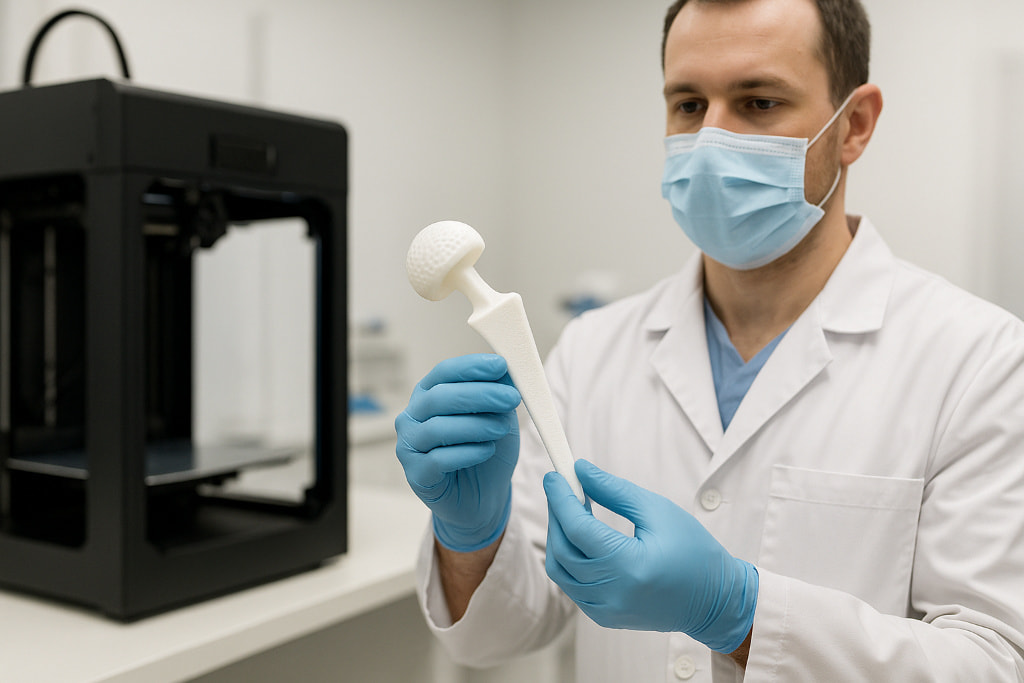
Retractors, clamps, forceps, and scalpel handles can be printed quickly using high-grade materials. They’re strong, sterilizable, and significantly cheaper.
3. Dental Applications
Dentists now rely on 3D printed crowns, aligners, retainers, and surgical guides, improving accuracy and patient satisfaction.
4. Anatomical Models
Doctors use 3D printed models of organs to prepare for complex surgeries, reducing risk and improving precision.
Future of 3D Printing in the Medical World
The future looks promising as researchers are experimenting with bioprinting, which means printing tissues and artificial organs using human cells.
Imagine a world where 3D-printed kidneys, liver tissues, or heart patches can save thousands of lives—that future is closer than we think.
As technology advances, 3D printing in healthcare will continue to bring innovation, affordability, and accessibility to millions.
3DReality Welcomes You.
We are experts in the 3D printing industry. We create professional-quality prints with high accuracy and super-fast delivery. Contact us today for any on-demand printing, rapid prototyping, or custom 3D printing services.
Final Words
3D printing is not just a modern-day invention—it’s a revolution. By enabling the creation of low-cost medical devices, it is bridging the gap between technology and affordable healthcare. Whether it’s prosthetics, dental solutions, surgical tools, or medical research, 3D printing is transforming lives one layer at a time.
If you are someone exploring the world of 3D printing or looking for reliable printing services, 3DReality is here to help you every step of the way.
FAQ’s
1. What medical devices can be created using 3D printing?
3D printing can create prosthetics, surgical tools, dental implants, anatomical models, casts, hearing aids, and even ventilator components.
2. Is 3D printing safe for medical devices?
Yes. Many 3D printing materials are biocompatible and sterilizable, making them safe for use in hospitals and surgeries.
3. How does 3D printing reduce the cost of medical devices?
It eliminates molds, reduces labor costs, speeds up production, and allows on-demand manufacturing—saving time and money.
4. How fast can a 3D printed medical device be made?
Depending on complexity, devices can be printed in a few hours to a day, much faster than traditional manufacturing.
5. Where can I get professional 3D printing services for medical devices?
You can contact 3DReality, a professional 3D printing service provider offering high-quality, fast, and accurate prints for all medical and industrial needs.