In today’s competitive world of product development, engineers must create innovative designs, test ideas quickly, and refine products before they reach the market. Traditional prototyping methods often require expensive tooling, long production cycles, and complex manufacturing processes. However, 3D printing has transformed the way engineers design and test prototypes.
By enabling faster design iterations, lower production costs, and greater design flexibility, 3D printing allows engineers to build better prototypes in less time. From concept validation to functional testing, this technology is becoming an essential tool in modern engineering.
Faster Prototype Development
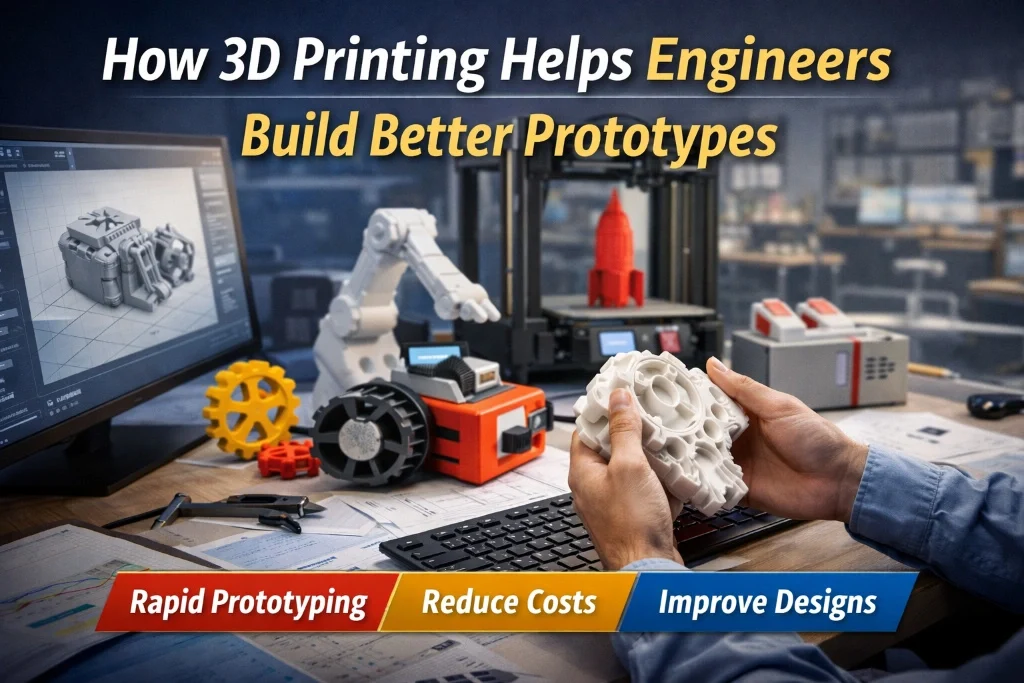
One of the biggest advantages of 3D printing for engineers is speed. In traditional manufacturing, creating a prototype may take weeks or even months due to tooling requirements and manufacturing limitations. With 3D printing, engineers can convert digital CAD models into physical prototypes within hours.
This rapid turnaround allows engineers to quickly test their ideas and identify potential design flaws early in the development process. If modifications are needed, they can simply update the design file and print a new version without starting the entire process again.
As a result, engineering teams can move from concept to prototype much faster than ever before.
Rapid Iteration and Design Improvements
Product design rarely works perfectly on the first attempt. Engineers often need to test multiple versions of a product before finding the best solution. 3D printing makes this process easier by enabling rapid iteration.
Instead of waiting for traditional manufacturing processes to produce new parts, engineers can make small adjustments to their design and print another prototype quickly. This encourages experimentation and innovation, allowing teams to refine their products step by step.
Rapid iteration helps engineers identify design improvements, optimize product performance, and reduce development risks before final production begins.
Reduced Development Costs
Cost is another major challenge in product development. Traditional prototyping methods often involve high tooling costs, especially for complex components. For small companies, startups, and research teams, these costs can limit innovation.
3D printing eliminates the need for molds and specialized tooling. Engineers can produce prototypes directly from digital designs using a variety of materials such as PLA, ABS, Nylon, and resin. This significantly reduces development expenses.
Because of these cost savings, engineering teams can experiment with multiple design ideas without worrying about exceeding their budget.
Complex Designs Made Simple
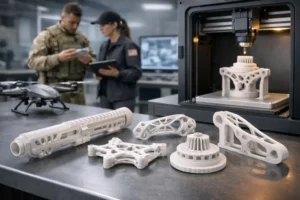
Modern engineering products often include complex shapes and intricate geometries that are difficult to produce using traditional manufacturing methods. 3D printing allows engineers to create highly detailed and complex prototypes that would otherwise be impossible or extremely expensive to manufacture.
For example, engineers can design lightweight internal structures, curved surfaces, and custom components without the restrictions of traditional manufacturing. This design freedom enables engineers to explore more creative solutions and build more efficient products.
Functional Testing and Validation
A prototype is not just for visual demonstration—it is also used for testing functionality and performance. With 3D printing, engineers can produce prototypes that closely resemble the final product.
These prototypes can be used for mechanical testing, assembly verification, ergonomic evaluation, and performance analysis. Engineers can check how different parts fit together and identify potential issues before moving to mass production.
By validating designs early in the development process, companies can avoid costly mistakes and improve overall product quality.
Improved Collaboration Between Teams
3D printed prototypes also improve communication between engineers, designers, and stakeholders. Instead of discussing ideas through drawings or digital models, teams can review a physical prototype together.
This makes it easier to explain design concepts, gather feedback, and make informed decisions. Whether presenting to clients, investors, or internal teams, a physical prototype provides a clearer understanding of the product.
Better collaboration leads to more efficient product development and better final results.
Accelerating Innovation in Engineering
As industries become more competitive, companies must innovate faster than ever before. 3D printing allows engineers to test new ideas, develop products more quickly, and bring innovations to market sooner.
Industries such as automotive, aerospace, healthcare, robotics, and consumer electronics are already using 3D printing to accelerate product development. Engineers can now experiment with new designs and technologies without the limitations of traditional manufacturing.
Conclusion
3D printing has revolutionized the way engineers approach prototyping and product development. By enabling faster prototype creation, lower costs, rapid iteration, and greater design flexibility, this technology empowers engineers to build better products more efficiently.
As the technology continues to evolve, 3D printing will play an even bigger role in engineering innovation, helping companies develop smarter, faster, and more efficient solutions.
Bring Your Prototype to Life
We are 3dreality.in, experts in professional 3D printing and rapid prototyping solutions. Our team helps engineers, startups, and businesses transform their ideas into high-quality prototypes using advanced 3D printing technologies.
If you have an idea or product design that needs prototyping, contact us today to bring your concept to life with reliable and industry-grade 3D printing services.
FAQ’s
1. What is a prototype in engineering?
A prototype is an early model of a product used by engineers to test design, functionality, and performance before final production.
2. How does 3D printing help engineers create prototypes?
3D printing allows engineers to quickly convert digital designs into physical models for testing and improvement.
3. Is 3D printing faster than traditional prototyping?
Yes, 3D printing can produce prototypes within hours, while traditional methods may take days or weeks.
4. Which materials are commonly used in 3D printing prototypes?
Common materials include PLA, ABS, resin, nylon, and other engineering-grade materials.
5. Why do engineers prefer 3D printing for prototyping?
Engineers prefer 3D printing because it is faster, cost-effective, and allows easy design modifications.