In today’s fast-moving startup ecosystem, speed is everything. The faster you can turn an idea into a real, usable product, the better your chances of winning customers, investors, and market share. This is where 3D printing has become a game-changer. What once took months and massive budgets can now be done in days—sometimes even hours.
For startups working with limited resources, 3D printing bridges the gap between imagination and reality, making product development faster, smarter, and more affordable.
Turning Ideas into Physical Reality—Fast
Every startup begins with an idea, but ideas alone don’t convince customers or investors. You need something tangible. Traditionally, creating a prototype involved complex tooling, high costs, and long waiting periods. With 3D printing, startups can convert digital designs into physical objects almost instantly.
A CAD design can be printed overnight, tested the next day, and improved immediately. This rapid turnaround allows founders to visualize their product early, identify design flaws, and refine functionality before investing heavily in production.
Rapid Prototyping Means Faster Iterations
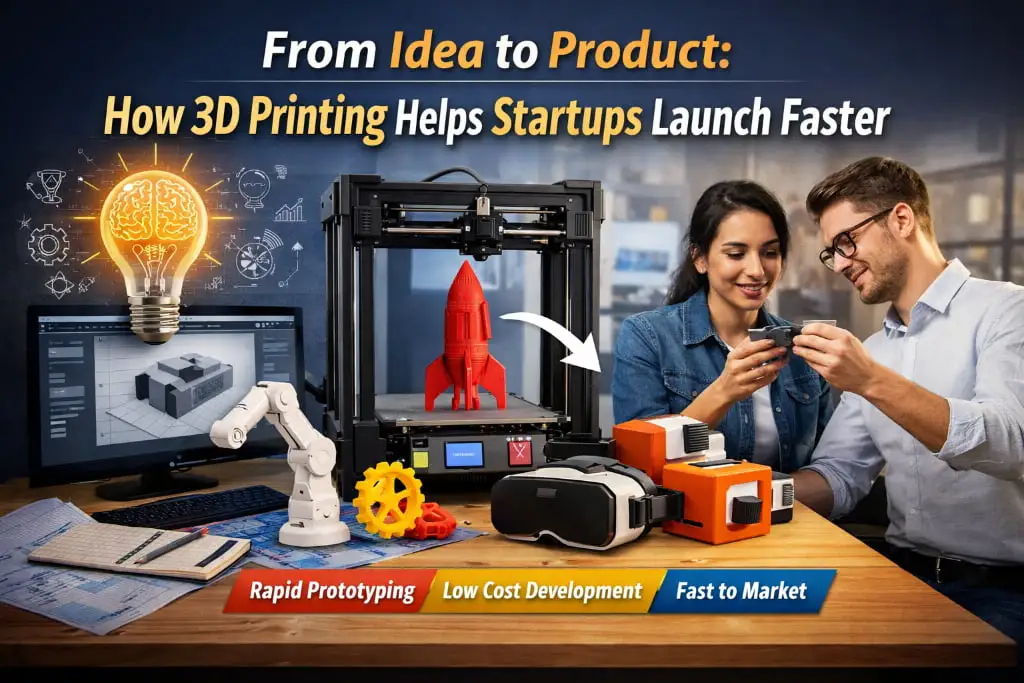
One of the biggest advantages of 3D printing is rapid prototyping. Instead of spending weeks modifying molds or parts, startups can make changes to the design file and print a new version within hours.
This quick iteration cycle encourages experimentation and innovation. Startups can test multiple versions of a product, compare designs, and select the best-performing option without fear of wasting money or time. Faster iterations lead to better products—and faster launches.
Lower Development Costs for Startups
Budget constraints are a reality for most startups. Traditional manufacturing methods often require expensive molds, minimum order quantities, and setup costs. 3D printing removes these barriers.
Since products are built layer by layer, there is no need for molds or complex tooling. Startups can produce single units or small batches at a fraction of the cost. This makes 3D printing ideal for early-stage development, pilot runs, and proof-of-concept models.
Faster Time-to-Market = Competitive Advantage
In competitive markets, being first matters. 3D printing significantly reduces the time it takes to go from concept to launch. Instead of waiting months for prototypes or parts, startups can move from design to testing almost immediately.
This speed allows startups to:
- Validate ideas faster
- Launch MVPs (Minimum Viable Products) quickly
- Respond to customer feedback in real time
As a result, startups can stay agile and ahead of competitors who rely on slower, traditional manufacturing processes.
Customization and Design Freedom
Startups often differentiate themselves through innovation and customization. 3D printing enables complex geometries and custom designs that are difficult or impossible with traditional manufacturing.
Whether it’s ergonomic product shapes, lightweight internal structures, or customized components, 3D printing allows startups to experiment freely. This design flexibility helps create unique products that stand out in the market.
Small-Batch Production Made Easy
Before scaling to mass production, startups often need limited quantities for beta testing, crowdfunding campaigns, or early customers. 3D printing is perfect for small-batch production.
Instead of ordering thousands of units, startups can print exactly what they need. This reduces inventory risks and allows them to test market demand before committing to large-scale manufacturing.
Investor-Ready Prototypes
When pitching to investors, a physical prototype speaks louder than slides or sketches. A well-designed 3D printed prototype demonstrates seriousness, feasibility, and execution capability.
Investors can touch, feel, and understand the product better, increasing confidence in the startup’s vision. This can significantly improve funding opportunities and partnerships.
From Prototype to Production
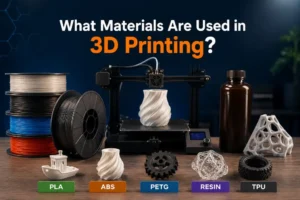
3D printing doesn’t stop at prototyping. Many startups now use it for functional parts, custom enclosures, jigs, fixtures, and even end-use products. With advancements in materials like ABS, Nylon, and engineering-grade resins, 3D printed components are stronger and more durable than ever.
This means startups can continue using 3D printing even after launch, especially for customized or low-volume products.
Conclusion: A Smarter Way to Build Products
For startups, 3D printing is more than just a manufacturing method—it’s a strategic advantage. It reduces costs, accelerates development, encourages innovation, and shortens time-to-market. In a world where speed and adaptability define success, 3D printing empowers startups to move from idea to product faster than ever before.
Let’s Build Your Idea Together
We are 3dreality.in, experts in professional 3D printing and product development solutions. From concept modeling and rapid prototyping to custom 3D printed parts, we help startups turn ideas into market-ready products faster and smarter.
Contact us today to bring your idea to life with industry-grade 3D printing solutions.
Your idea deserves to become a product—and we’re here to make it happen.
FAQ’s
1. How does 3D printing help startups?
3D printing helps startups create prototypes quickly, reduce development costs, and launch products faster.
2. Is 3D printing cost-effective for startups?
Yes, 3D printing is affordable for startups as it eliminates tooling costs and supports low-volume production.
3. Can startups use 3D printing for final products?
Many startups use 3D printing for end-use parts, custom products, and small-batch manufacturing.
4. How fast can startups create prototypes using 3D printing?
Startups can create functional prototypes within hours or days using 3D printing.
5. Which industries benefit most from 3D printing startups?
Industries like healthcare, automotive, consumer products, and electronics benefit the most.