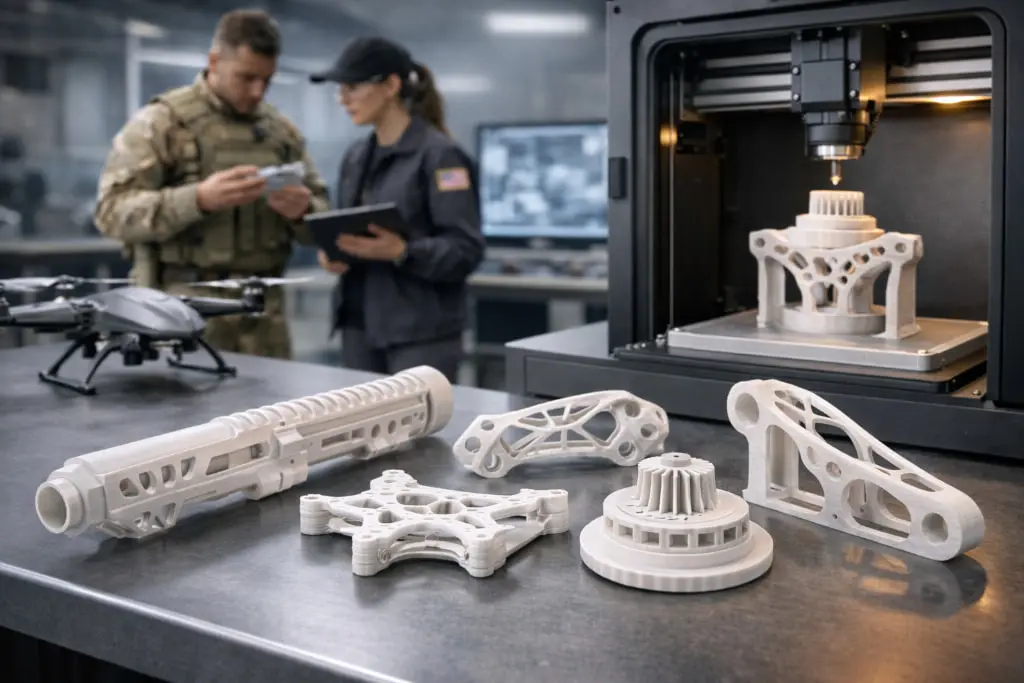
The defense industry is evolving faster than ever, and one technology leading this transformation is 3D printing. From rapid prototyping to full-scale production, lightweight 3D printed parts for defense applications are redefining how military equipment is designed, manufactured, and deployed. The demand for strength, speed, customization, and cost efficiency has made additive manufacturing a game-changer in modern defense systems.
In this article, we’ll explore how 3D printing in defense is revolutionizing military operations, why lightweight components matter, and how this technology is shaping the future of national security.
Why Lightweight Matters in Defense Applications
Weight is a critical factor in defense equipment. Whether it’s aircraft, drones, armored vehicles, or soldier gear, reducing weight without compromising strength directly improves:
- Fuel efficiency
- Speed and maneuverability
- Payload capacity
- Operational range
- Soldier endurance
Traditional manufacturing methods often limit design flexibility. However, 3D printing technology enables the creation of complex, lightweight structures that were previously impossible to manufacture.
Role of 3D Printing in the Defense Industry
3D printing, also known as additive manufacturing, allows defense organizations to design and produce parts layer by layer. This results in highly optimized geometries that reduce material usage while maintaining structural integrity.
Popular 3D printing applications in defense include:
- Aircraft and UAV components
- Lightweight armor parts
- Weapon system components
- Communication equipment housings
- Field repair tools and spare parts
With on-demand manufacturing, military units can produce critical components even in remote locations, reducing dependency on long supply chains.
Advanced Materials Used in Lightweight 3D Printed Defense Parts
One of the biggest advantages of 3D printing for defense applications is access to high-performance materials. These materials are engineered to withstand extreme environments while remaining lightweight.
Commonly used materials include:
- High-strength polymers (Nylon, PEEK, PEKK)
- Metal alloys (Titanium, Aluminum, Inconel)
- Carbon fiber reinforced composites
These materials provide exceptional strength-to-weight ratios, corrosion resistance, and thermal stability—perfect for defense requirements.
Key Benefits of Lightweight 3D Printed Parts in Defense
1. Faster Production & Rapid Prototyping
Defense projects often require quick development cycles. 3D printing enables rapid prototyping, allowing engineers to test, modify, and improve designs in days instead of months.
2. Cost Efficiency
By minimizing material waste and tooling costs, 3D printing reduces overall manufacturing expenses, especially for low-volume or custom defense components.
3. Design Freedom
Complex lattice structures, internal channels, and topology-optimized designs are easy to achieve with additive manufacturing, making parts lighter yet stronger.
4. Supply Chain Security
Local and on-site production of 3D printed defense parts enhances operational readiness and reduces risks related to global supply disruptions.
Real-World Defense Applications of Lightweight 3D Printing
- Military Drones (UAVs): Lightweight frames improve flight time and agility
- Aircraft Components: Reduced weight leads to better fuel efficiency
- Protective Gear: Customized helmets, mounts, and supports
- Naval Systems: Corrosion-resistant and lightweight parts for marine environments
- Field Repairs: Instant manufacturing of replacement parts during missions
As defense forces aim for agility and modernization, 3D printing technology is becoming a core manufacturing strategy.
The Future of Lightweight 3D Printing in Defense
The future of 3D printing in defense applications looks promising. With advancements in AI-driven design, multi-material printing, and large-scale metal additive manufacturing, defense systems will become lighter, stronger, and smarter.
Governments and private defense contractors are increasingly investing in 3D printing solutions to stay ahead in technology and combat readiness.
Partner with Experts in 3D Printing
3dreality welcomes you — we are experts in the 3D printing industry. Contact us to explore advanced 3D printing solutions tailored for defense and industrial applications.
By choosing the right partner, defense organizations can unlock the full potential of lightweight 3D printed parts and future-ready manufacturing.
With its ability to reduce weight, improve strength, and enable rapid production, 3D printing is becoming an essential technology for next-generation defense manufacturing.
FAQ’s
1. What are lightweight 3D printed parts?
They are strong, low-weight components made using 3D printing for high-performance defense applications.
2. How is 3D printing used in defense?
3D printing is used to manufacture aircraft parts, drones, military tools, and custom components quickly.
3. Which materials are used for defense 3D printing?
Common materials include titanium, aluminum, high-strength polymers, and carbon fiber composites.
4. Why are lightweight parts important in defense?
Lightweight parts improve speed, fuel efficiency, mobility, and overall mission performance.
5. Is 3D printing reliable for military use?
Yes, when certified materials and strict quality controls are applied, 3D printed parts are highly reliable.