Sustainability is no longer a trend—it is a necessity. As industries move toward greener manufacturing practices, 3D printing technology is playing a vital role in reducing waste, saving energy, and enabling the use of eco-friendly materials. Modern 3d printing is not just about speed and precision; it is also about responsibility toward the environment.
In this article, we will explore how sustainable materials are transforming 3D printing, which materials are most commonly used today, and how businesses and individuals can benefit from eco-friendly 3d printing technology.
Why Sustainability Matters in 3D Printing
Traditional manufacturing methods often involve excessive material waste, high energy consumption, and harmful emissions. In contrast, 3D printing uses an additive manufacturing process—materials are added layer by layer, minimizing waste.
With the rise of environmental awareness, industries are actively searching for sustainable 3d printing materials that reduce carbon footprint without compromising performance. From prototyping to large-scale production, 3d printing technology is becoming a greener alternative.
Popular Eco-Friendly Materials Used in 3D Printing
1. PLA (Polylactic Acid)
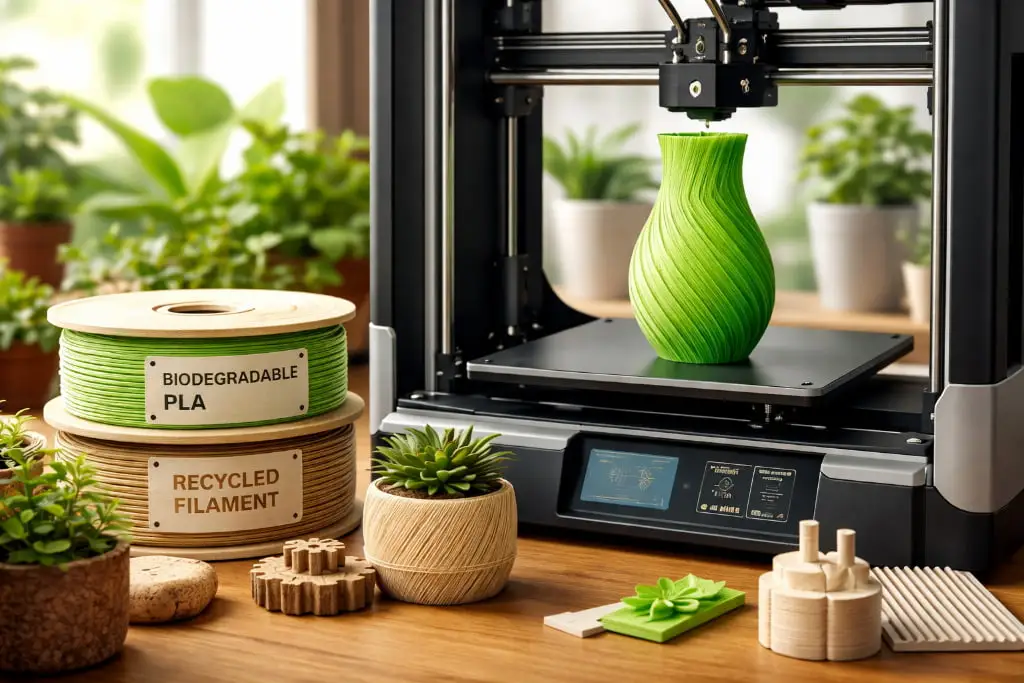
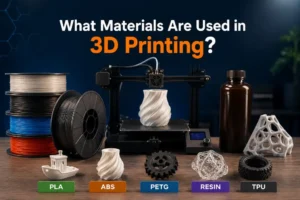
PLA is one of the most widely used eco-friendly 3d printing materials. Made from renewable resources like corn starch or sugarcane, PLA is biodegradable and compostable under industrial conditions. It is ideal for:
- Prototyping
- Educational models
- Decorative items
PLA is also low in toxicity and easy to print, making it a favorite in 3d printing for beginners and professionals alike.
2. Recycled Filaments
Recycled plastics are now being converted into high-quality 3d printing filaments. These materials are created by reprocessing plastic waste such as PET bottles and industrial plastic scraps.
Benefits include:
- Reduced landfill waste
- Lower raw material cost
- Environmentally responsible 3d printing technology
Recycled filaments are increasingly used in product design, packaging prototypes, and functional components.
3. Bio-Based and Composite Materials
Modern 3d printing also uses bio-composites like wood-filled PLA, bamboo fiber filament, and hemp-based materials. These blends reduce plastic content while maintaining strength and aesthetics.
Such materials are popular in:
- Furniture design
- Architectural models
- Interior décor elements
They give printed objects a natural look while supporting sustainable manufacturing.
4. Water-Soluble and Non-Toxic Materials
Some eco-friendly 3d printing materials dissolve in water and are used mainly as support materials. These reduce the need for harsh chemicals during post-processing and make 3D printing safer for users and the environment.
How Eco-Friendly 3D Printing Helps Industries
Reduced Material Waste
Unlike traditional subtractive manufacturing, 3D printing uses only the required amount of material. This leads to minimal scrap and lower environmental impact.
Energy Efficiency
Many 3d printing machines consume less energy compared to conventional manufacturing setups, especially for small-batch production and rapid prototyping.
Localized Production
With 3d printing technology, products can be manufactured locally, reducing transportation emissions and supporting decentralized production models.
Industries Adopting Sustainable 3D Printing
Eco-friendly 3d printing is being adopted across multiple sectors:
- Automotive – Lightweight components using recycled materials
- Healthcare – Biodegradable medical models and tools
- Construction – Sustainable architectural models and parts
- Consumer Products – Eco-conscious product designs
As sustainability becomes a priority, the demand for green 3d printing solutions continues to grow.
Challenges of Eco-Friendly 3D Printing
While sustainable 3d printing materials offer many benefits, they also come with challenges:
- Limited strength compared to traditional plastics
- Higher material costs in some cases
- Need for controlled disposal or recycling systems
However, ongoing research in 3D printing technology is rapidly addressing these limitations.
The Future of Sustainable 3D Printing Technology
The future of 3d printing is green. Innovations such as algae-based filaments, fully recyclable polymers, and closed-loop recycling systems are shaping the next generation of 3D printing technology.
As businesses and creators become more environmentally conscious, eco-friendly 3d printing will become the standard rather than the exception.
Final Thoughts
Eco-friendly materials are revolutionizing 3D printing, making it smarter, cleaner, and more sustainable. From biodegradable PLA to recycled filaments, 3d printing technology is proving that innovation and environmental responsibility can go hand in hand.
3dreality welcomes you — we are expert in 3d printing industry. Contact us to explore sustainable 3d printing solutions that align with your business goals and environmental values.
If you want help choosing the right eco-friendly 3d printing materials or need professional 3D printing services, feel free to ask— We are here to help.
FAQ’s
1. What is modern 3D printing?
Modern 3D printing is an advanced manufacturing process that creates objects layer by layer using digital designs, offering high precision, speed, and material efficiency.
2. How is modern 3D printing different from traditional manufacturing?
Unlike traditional methods, modern 3D printing reduces material waste, allows complex designs, enables rapid prototyping, and supports eco-friendly production.
3. Which industries use modern 3D printing technology?
Modern 3D printing is widely used in healthcare, automotive, construction, aerospace, education, and consumer product manufacturing.
4. Is modern 3D printing environmentally friendly?
Yes, modern 3D printing supports sustainability by using biodegradable and recycled materials while minimizing waste and energy consumption.
5. What materials are used in modern 3D printing?
Modern 3D printing uses materials such as PLA, recycled plastics, bio-based filaments, resins, and advanced composites depending on the application.