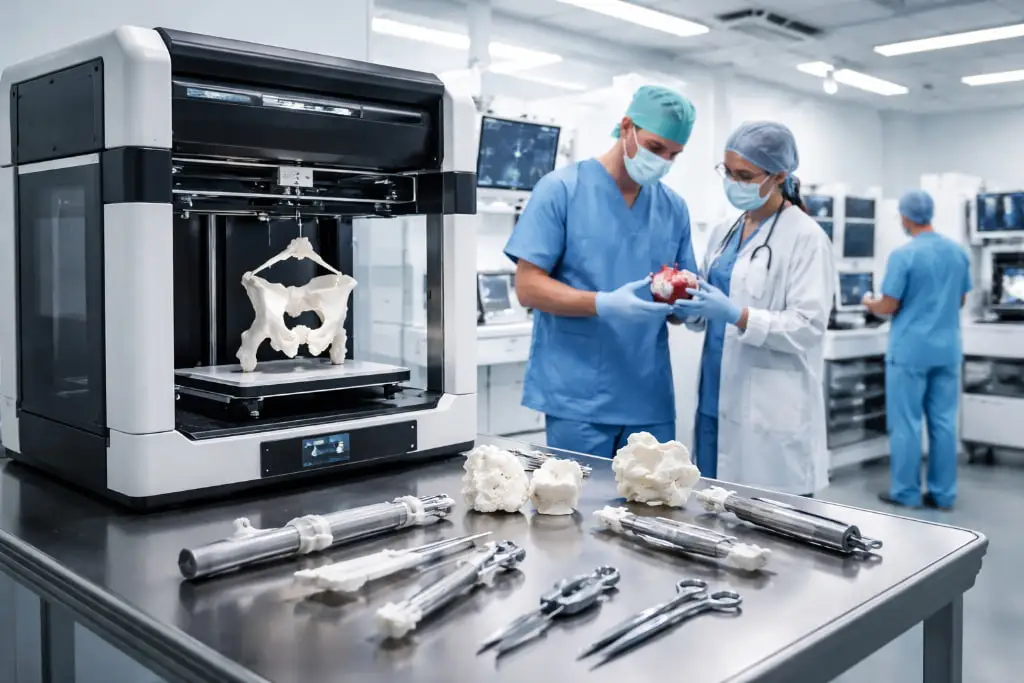
Healthcare costs are rising globally, and hospitals are under constant pressure to deliver better patient outcomes while controlling expenses. One technology that is transforming this balance is 3D printing. From customized surgical tools to patient-specific anatomical models, 3D printing in healthcare is helping hospitals significantly reduce surgical costs without compromising quality or safety.
Let’s explore how hospitals are using 3D printing to make surgeries more efficient, accurate, and affordable.
1. Customized Surgical Instruments at Lower Cost
Traditional surgical instruments are mass-produced and often expensive, especially when customization is required. With 3D printing, hospitals can design and manufacture custom surgical tools in-house or through specialized providers.
These tools are:
- Tailored to specific procedures
- Optimized for surgeon comfort
- Produced at a fraction of traditional manufacturing costs
By using 3D printed surgical instruments, hospitals reduce procurement expenses and avoid long waiting periods from suppliers.
2. Patient-Specific Surgical Planning Models
One of the most impactful uses of 3D printing in hospitals is creating patient-specific anatomical models. These models are made from CT or MRI scans and allow surgeons to visualize complex anatomy before surgery.
Benefits include:
- Better pre-surgical planning
- Reduced operation time
- Fewer surgical errors
Shorter surgeries directly translate into lower operating room costs, reduced anesthesia usage, and faster patient recovery.
3. Reduced Operation Time and Complications
Operating rooms are among the most expensive hospital resources. Every extra minute adds cost. 3D printed surgical guides and templates help surgeons perform procedures with higher precision and speed.
With improved accuracy:
- Surgeries are completed faster
- Risk of complications is reduced
- Fewer revision surgeries are required
This cost-saving advantage makes medical 3D printing a powerful tool for hospitals aiming to optimize surgical efficiency.
4. On-Demand Manufacturing of Surgical Items
Hospitals traditionally rely on large inventories of surgical tools and accessories. Managing and storing these inventories is expensive. 3D printing enables on-demand production, allowing hospitals to print required surgical items when needed.
This approach:
- Reduces storage and inventory costs
- Minimizes waste of unused tools
- Ensures quick availability in emergencies
On-demand 3D printing for hospitals is especially valuable for rare or specialized procedures.
5. Affordable Training and Simulation Models
Training surgeons using real equipment and cadavers is costly and limited. With 3D printing, hospitals can create realistic surgical training models at a much lower cost.
These models help:
- Train surgeons without risking patient safety
- Improve surgical skills before real procedures
- Reduce learning-related surgical errors
Better-trained surgeons mean fewer complications and lower long-term healthcare costs.
6. Cost-Effective Prototyping and Innovation
Developing new surgical devices through traditional manufacturing is expensive and time-consuming. 3D printing allows hospitals and medical innovators to rapidly prototype new ideas at low cost.
Hospitals can:
- Test new surgical tools quickly
- Modify designs without high tooling expenses
- Collaborate with surgeons for better solutions
This flexibility encourages innovation while keeping costs under control.
7. Use of Affordable and Biocompatible Materials
Modern 3D printing materials are not only affordable but also biocompatible and sterilizable. Materials like medical-grade plastics and resins meet hospital safety standards while costing significantly less than conventionally manufactured alternatives.
This makes 3D printed medical devices a practical and economical solution for many surgical applications.
8. Faster Recovery Means Lower Hospital Stay Costs
When surgeries are more precise and efficient, patients recover faster. 3D printing-supported surgeries often result in:
- Less tissue damage
- Shorter hospital stays
- Reduced post-operative complications
Shorter recovery times directly reduce hospitalization costs and improve patient satisfaction.
The Future of Cost-Effective Surgery with 3D Printing
As 3D printing technology continues to advance, its role in cost reduction will only grow. Hospitals adopting medical 3D printing solutions are gaining a competitive edge by offering high-quality care at optimized costs.
From surgical planning to instrument manufacturing, 3D printing is reshaping how hospitals think about efficiency, accuracy, and affordability.
Final Thoughts
Hospitals that embrace 3D printing in healthcare are not just adopting a new technology—they are investing in smarter, more sustainable surgical practices. Lower costs, better outcomes, and faster innovation make 3D printing a game-changer in modern medicine.
3DReality welcomes you — we are experts in the 3D printing industry.
Contact us to explore advanced 3D printing solutions for hospitals and surgical applications.